
Professional Business Letter Samples for Any Situation in 2026
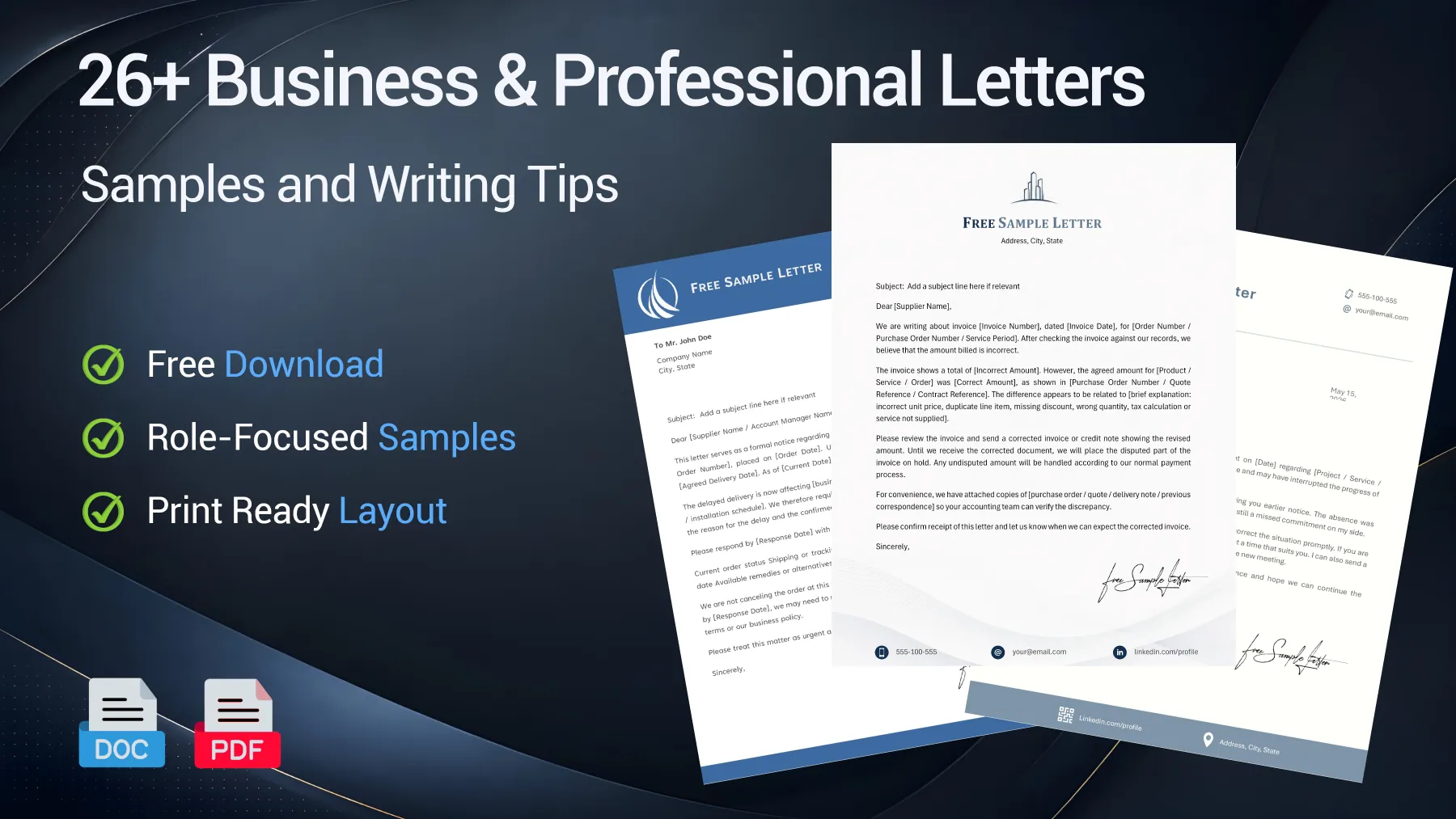
Use this page when you need a business letter, professional email, company notice or formal request and are not sure which tone or format fits. Begin with the business situation, then choose the sample that matches the recipient, reference and next step. The right format helps you communicate clearly and create an appropriate written record.
Customers, Suppliers and Business Partners
Use these business letter samples for situations involving customers, suppliers, vendors, clients or business partners. Choose this section when you need to follow up, apologize, notify, congratulate or manage an ongoing professional relationship.
Payments, Invoices and Order Letters
Use these samples for overdue invoices, payment plans, billing errors, purchase orders, late deliveries and other transactions that need clear written follow-up. This section covers payment reminders, invoice letters, order letters and related transaction records.
Bad Check Notice
First NoticeFormal DemandClient Email+1Invoice Billing Error
EmailSupplierOvercharge+1Late Delivery Notice
Customer NoticeSupplierFormal Notice+1Late Payment Reminder
First ReminderSecond ReminderPayment Plan+1Order Acknowledgement
StandardEmailPayment+1Order Delay Complaint
Delivery UpdateRefundSupplier Delay+2Payment Plan Request
SupplierCreditorShort Email+1Refund Request
Faulty GoodsSupplierService Not Delivered+1
HR and Company Letters
Use these employer-side samples to communicate with candidates and employees. This section includes HR letters for resignations, welcomes, rejections, reference checks, layoffs and other formal company communications.
Candidate Rejection
ApplicationInterviewFinal Round+1Employee Congratulations
SalesProjectLaunch+1Employment Termination
StandardPerformanceMisconduct+2Interview Invitation
StandardFormalVideo+1Layoff Notice
PermanentTemporaryRedundancy+1New Employee Welcome
ManagerHrTeam+1Reference Check Response
FactualPositivePolicy Limited+1Resignation Acceptance
StandardEmailImmediate+1Retirement Congratulations
EmployerManagerTeam+1
Business Proposals, Sponsorships and Requests
These letters help organizations request funding, sponsorship, business support, partnerships or formal approval. State the purpose, value and requested next step clearly.
Company Events, Speeches and Professional Messages
Use these examples when the business message is spoken or event-based: launch remarks, welcome speeches, retirement messages, volunteer addresses and professional announcements.
Business Letter and Professional Writing Guides
Different business situations require different formats. Whether you are sending a client follow-up, invoice reminder, supplier notice, HR letter, reference check or sponsorship request, state the purpose clearly, include the relevant references and end with one specific next step.
Do & Don’t - Choosing the Right Business Letter
A business letter is effective when it gives the recipient enough context to act. Choose the right sample based on the business relationship, the record you need to create and whether the matter is routine, sensitive or formal.
What Makes Business Writing Weak
Red Flags- Choose a formal notice when a short professional email would be clearer
- Use vague phrases such as “regarding this matter” without naming the issue
- Omit important invoice, order, contract, meeting or candidate references
- Use legal or threatening language in an initial routine message
- Confuse employer-side HR letters with employee request letters
- Use consumer-rights wording for a business-to-business matter without checking the context
What Makes the Letter Easier to Act On
Trust Signals- Begin with the specific business purpose
- Match the format to the situation: email, formal letter, notice or proposal
- Include the relevant recipient, reference, date, amount or project
- State one clear next step
- Adjust the tone to the relationship: firm, calm or warm
- Review contract terms, policies or official rules before sending sensitive letters
Free Letter Templates and Letterheads for Business Documents
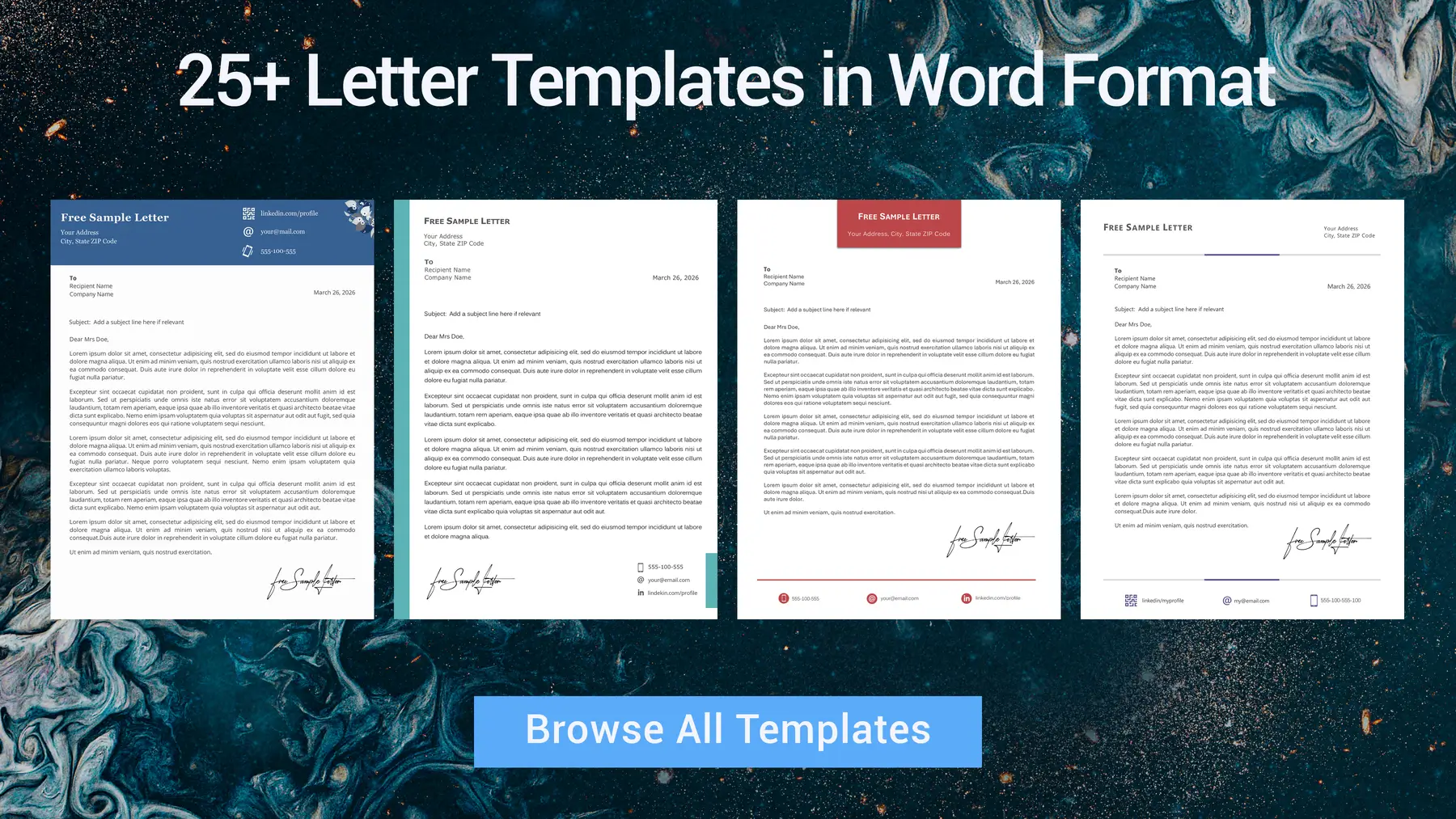
Need a cleaner layout for a formal business letter, payment notice, proposal or company message? Browse our free letter templates and letterheads to give your document a polished, easy-to-follow structure before sending it.
FAQ - Business and Professional Letters
What is a business letter used for? Toggle answer
A business letter is used to make a formal request, confirm information, follow up on a professional matter, create a written record, notify a customer or communicate with a supplier, partner, candidate or employee. It helps document the issue, relevant facts and requested action.
Should I send a business letter or a business email? Toggle answer
Use email when speed, reply tracking or routine communication matters. Use a formal business letter when the message needs a stronger record, official tone, letterhead, attachments or careful wording, especially for payment, HR, contract or supplier matters.
What should a business letter include? Toggle answer
Include the recipient, date, purpose, relevant references, facts the reader can verify and the action you want next. For invoices, orders, HR matters or proposals, specify the exact number, date, amount, role or project involved.
Can I use the same business letter in the UK, US, Canada or Australia? Toggle answer
For routine professional messages, the same basic structure may work with local spelling and tone adjustments. For termination, layoffs, debt, privacy, contracts, employment or regulated business matters, check the rules that apply in the relevant country before relying on a template.
Should a business letter mention legal action? Toggle answer
Usually not in an initial routine message. Start with the facts, relevant references and a reasonable request. Mention legal action or escalation only in a final notice or high-risk situation where the contract, policy or applicable rules support that wording.
How do I choose the right business letter sample? Toggle answer
Begin by identifying the recipient. A supplier letter, client notice, payment reminder, candidate rejection and sponsorship request each require different wording. Then choose the sample that matches the stage: first request, follow-up, formal notice or final response.