
Work & Job-Related Letter Examples for Employees in 2026
Browse our work and employment letter samples for employee requests, HR emails, resignations, time off, salary questions, payroll errors, job offers, and formal workplace concerns. Select the sample that best fits your situation, then adjust the facts, tone, dates, documents, company policy, contract, and local rules as needed before sending.
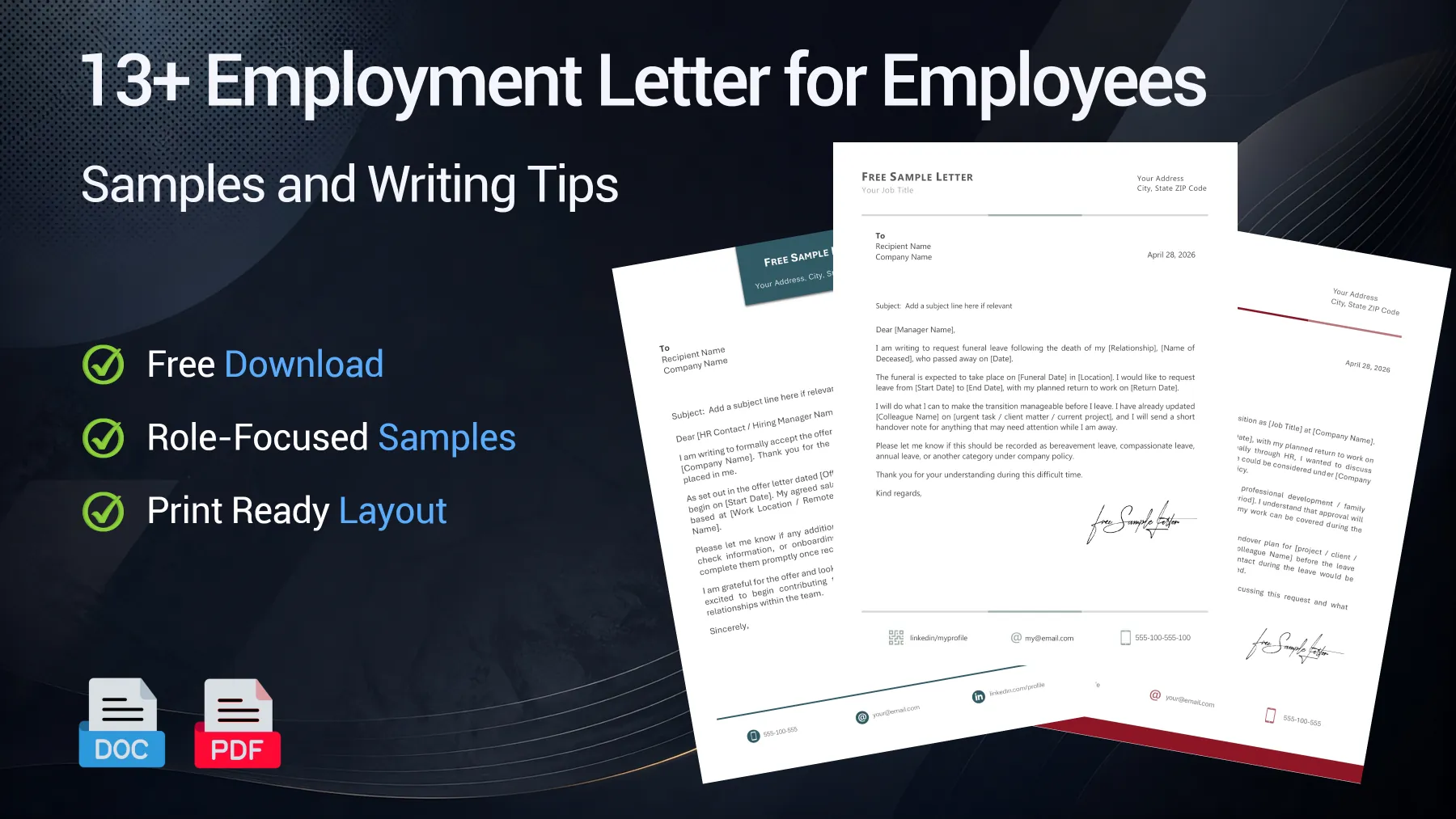
Employee Request Letters for Leave, Pay and Work Changes
These samples are helpful for requests that require approval, specific timing, or a written record. Use them when you need to ask clearly, without sounding too casual, demanding, or vague.
Resignation, Farewell and Job Offer Letters
Job changes require clear and concise wording. These examples help you accept or decline a job offer, resign properly, or say goodbye without making your message longer than necessary.
Farewell Letter to Colleagues
ResignationRetirementInternal Transfer+1Job Offer Acceptance Letter
Standard EmailFormal LetterRevised OfferJob Offer Rejection Letter
Polite StandardSalary ConditionsAfter Accepting+1Resignation Letter
Standard NoticeNew JobShort Notice+1Retirement Speech
RetireeCoworkerManager+2Welcome Speech
EmployeesAssociation MembersVolunteers+2
Career Support Letters for References and Applications
These samples are useful when your next step depends on a professor, manager, interviewer, or referee. Use them to make clear requests, follow up professionally, and maintain polished career communication without sounding stiff.
Workplace Issue Letters That Need a Written Record
Some messages require extra care. When pay, dismissal, or a formal complaint is involved, keep your wording factual, include relevant dates, and make sure your message is easy to review later.
How to Write a Letter to Your Employer
Not sure how formal your message should be? A workplace letter needs more than just polite wording. Clearly state your situation, provide the relevant facts, and make one specific request. Avoid vague language that leaves HR or your manager guessing about your intentions.
How to Use Work Letter Samples Without Weakening Your Message
A workplace sample is only helpful if it fits your actual situation. Use it to structure your message, but always adjust the facts, tone, and level of formality before sending it to HR, your manager, or employer.
Common mistakes to avoid
Common pitfalls- Sending a generic letter that does not clearly state the main issue or request
- Using a tone that is too casual for HR, pay, leave, or resignation matters
- Leaving out important details such as dates, amounts, notice periods, or the response you expect
- Using emotional language when the situation requires facts and a clear written record
- Assuming one template fits all countries, contracts, or workplace policies
How to make the sample work for you
Best practices- State the purpose of your letter in the opening lines
- Include the dates, documents, or details the recipient needs to take action
- Match your tone to the seriousness of the situation
- Check your contract, employee handbook, or HR policy when rights or deadlines are involved
- Close with a clear next step, rather than just a general thank-you line
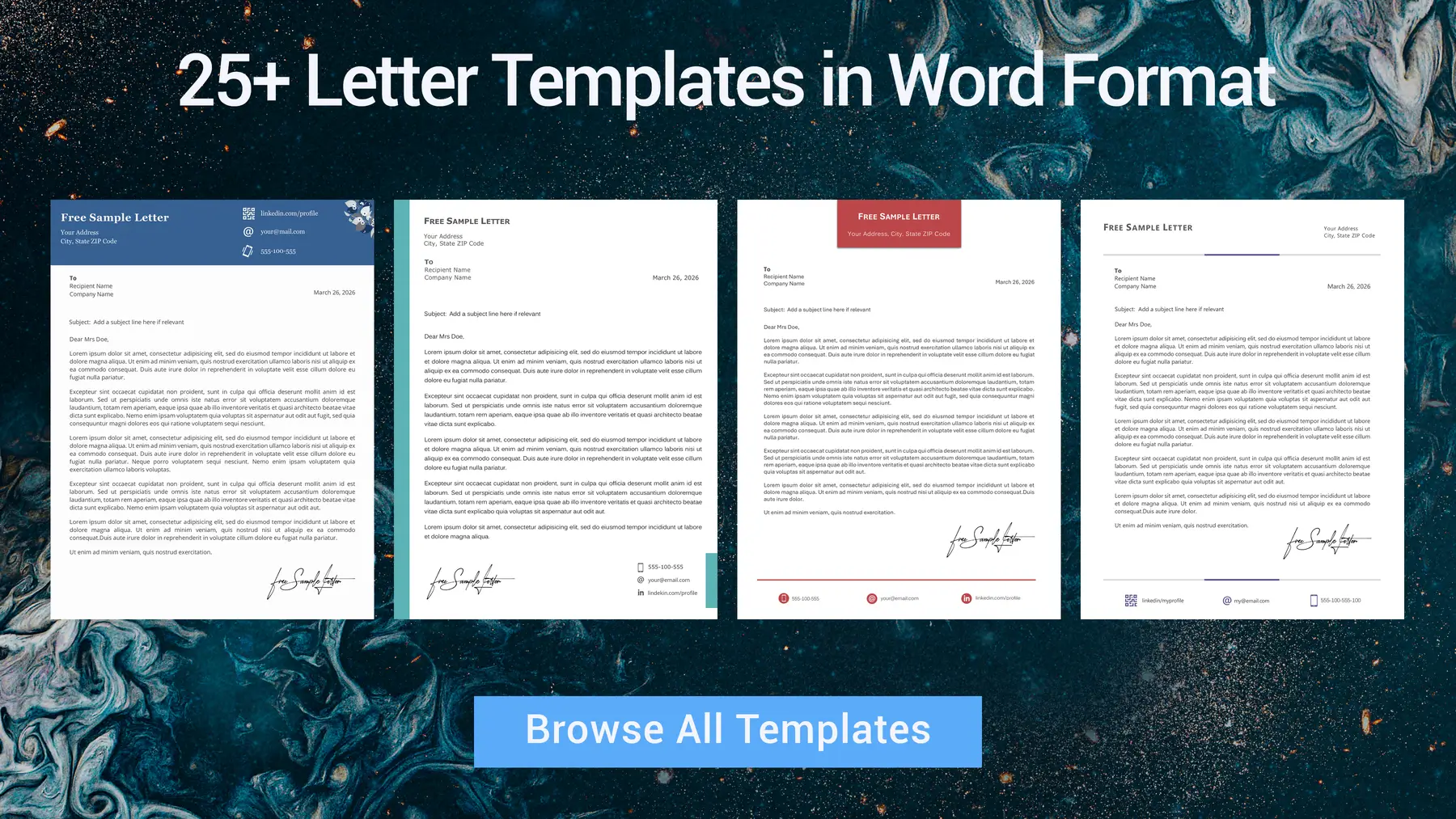
Free Letter Templates and Letterheads for Work Documents
Need a cleaner layout for a formal request, notice, or complaint? Browse our free letter templates and letterheads to give your workplace document a more polished and professional structure before you send it.
FAQ - Work and Employment Letters
What is a work-related letter? Toggle answer
A work-related letter is any written communication related to employment, such as leave requests, resignations, salary inquiries, job offers, payroll issues, or formal workplace concerns. It may take the form of an email, a signed letter, or a formal written notice.
Should I send a workplace letter by email or as a formal letter? Toggle answer
For routine requests, email is usually sufficient. Use a formal letter if the issue requires a written record, involves an HR procedure, affects pay or employment status, or may need to be saved for future reference. For important or disputed matters, consider using a tracked or registered delivery method if available in your country.
Can I use the same employment letter sample in any country? Toggle answer
Use the sample wording as a starting point, not as a universal rule. Notice periods, leave rules, dismissal procedures, and pay complaints can vary by country, contract, award, handbook, or company policy.
How formal should my letter to an employer be? Toggle answer
Match the formality to the situation. A farewell note can be warm, while a leave request should be clear and well-planned. For payroll errors, resignations, or complaints, keep your message factual, dated, and easy for HR to process.
What should I always include in a letter to HR or a manager? Toggle answer
Include the reason for writing, key dates or facts, any supporting documents, and a clear description of the action you are requesting. The recipient should not have to guess what you want.
Can I copy and paste a work letter sample? Toggle answer
You can reuse the structure, but not the finished text. Always replace the facts, dates, tone, and request so the letter matches your real situation and your workplace process.