
Machine Operator Cover Letter Examples Recruiters Respect in 2026
Need a cover letter quickly, but want to avoid sounding generic? These machine operator examples help you highlight real production value, safe machine habits, and the specific details hiring managers pay attention to.
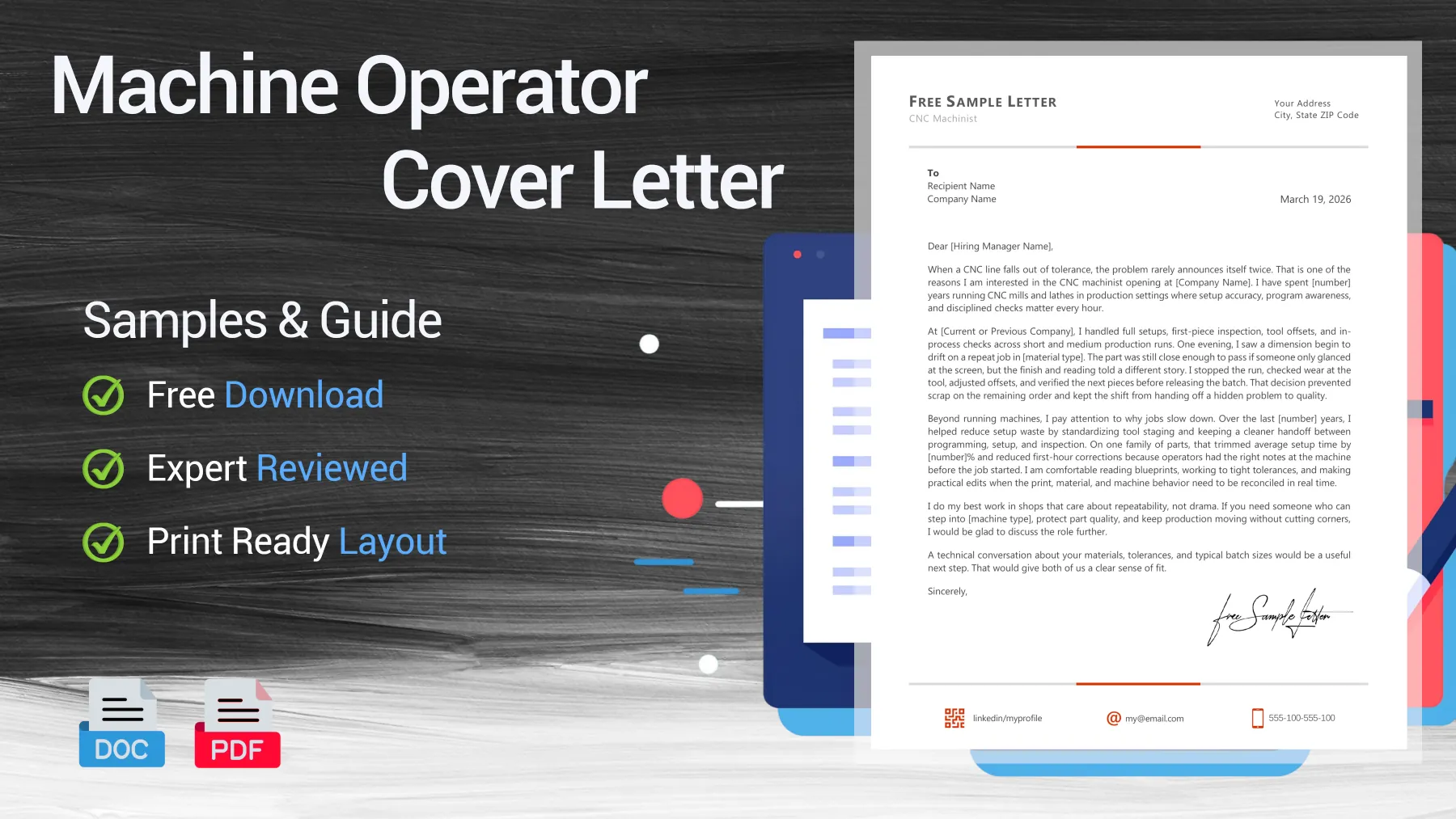
Free CNC Machinist and Machine Operator Application Samples
According to the U.S. Bureau of Labor Statistics, metal and plastic machine workers still see an average of 87,900 job openings each year, even as employers invest in CNC tools and robotics to boost quality and reduce costs. The takeaway: a strong cover letter should highlight machine-specific setup, monitoring, and adjustment skills, not just general factory experience.
Machine Operator Application Letter for a First Factory Role
Built for an entry-level candidate with no direct machine operator history, this version turns training, discipline, and shift reliability into a credible first application.
Dear [Hiring Manager Name],
Production floors run smoothly when people catch small issues before they become big problems. That is why I want to join [Company Name] as a machine operator. I may not have direct experience yet, but I already work the way strong operators need to: steady, alert, and precise with routine tasks.
During my training at [School or Training Center], I learned to read work instructions carefully, check basic measurements, and repeat tasks until the results were consistent. In one exercise, a batch was coming out uneven because the material was slightly misaligned. I paused, rechecked the guide marks, and requested to reset the setup before the rest of the pieces were cut. That moment taught me a key lesson: speed is important, but control comes first.
Outside the classroom, I worked at [Previous Employer], handling shift-based tasks in a fast-paced environment while keeping my station organized and meeting hourly targets. I was trusted to prepare materials, label outgoing items correctly, and flag issues before they slowed down the process. While I have not run production machines yet, that job built the habits your team values from day one: showing up on time, following procedures, staying focused, and respecting safety rules under pressure.
The fastest way I can help [Company Name] is by learning your equipment properly, keeping standards high, and supporting the experienced operators around me. I do not need to arrive knowing everything. I need to arrive ready, coachable, and serious about the work.
A brief interview or floor discussion would let me explain how quickly I pick up procedures and how I would approach this role from my very first shift.
Sincerely,
[Your Name]

Reviewed by Robert H., Technical Recruiter
I notice the writer never fakes machine time. I trust the letter more because it shows judgment, trainability, and respect for process from the start.
CNC Machinist Cover Letter for Precision Production Work
Written for a senior CNC machinist, this version highlights setup ownership, blueprint reading, and the kind of troubleshooting that protects quality before scrap grows.
Dear [Hiring Manager Name],
When a CNC line falls out of tolerance, the problem rarely gives a second warning. That is one reason I am interested in the CNC machinist role at [Company Name]. I have spent [number] years running CNC mills and lathes in production environments where setup accuracy, program awareness, and disciplined checks matter every hour.
At [Current or Previous Company], I managed full setups, first-piece inspections, tool offsets, and in-process checks for both short and medium production runs. One evening, I noticed a dimension drifting on a repeat job in [material type]. The part might have passed a quick screen check, but the finish and measurement told a different story. I stopped the run, checked the tool for wear, adjusted offsets, and verified the next pieces before releasing the batch. That decision prevented scrap on the rest of the order and kept a hidden problem from reaching quality control.
Beyond running machines, I focus on what causes delays. Over the past [number] years, I have helped reduce setup waste by standardizing tool staging and improving handoffs between programming, setup, and inspection. On one part family, this cut average setup time by [number]% and reduced first-hour corrections because operators had the right notes at the machine from the start. I am comfortable reading blueprints, working to tight tolerances, and making practical edits when the print, material, and machine behavior need to be aligned in real time.
I do my best work in shops that value repeatability, not drama. If you need someone who can step into [machine type], protect part quality, and keep production moving without cutting corners, I would be glad to discuss the role further.
A technical conversation about your materials, tolerances, and typical batch sizes would be a valuable next step and help both of us decide whether it is the right fit.
Sincerely,
[Your Name]
Reviewed by Robert H., Technical Recruiter
This letter feels grounded in real shop work. The inspection and handoff details tell me the candidate knows where quality is usually won or lost.
Career Change Cover Letter for a Machine Operator Role
Tailored to a mid-career switch, this machine operator sample explains the career break clearly and backs it up with training and durable work habits.
Dear [Hiring Manager Name],
A career change only makes sense when the daily work matches how a person really operates. That is why I am applying for the machine operator position at [Company Name]. After [number] years in retail management, I chose to move into manufacturing and build a career around process, measurable output, and hands-on work.
Leaving my previous field was not a casual move. I completed [Course, Certificate, or Training Program] while still working full time to test whether I was serious about shop-floor work. I was. I found that I am most engaged when tasks require sequence, focus, and hands-on follow-through, not constant customer-facing improvisation. In training, I became comfortable with basic measurement, safety procedures, production documents, and the discipline of doing the same task correctly every time.
My previous career still gave me valuable habits. At [Previous Employer], I managed busy shifts, handled stock issues, and kept operations steady when plans changed. One afternoon, two team members called out during a heavy delivery window, and I had to reorganize tasks, cover key steps myself, and keep timing under control so service did not fall behind. That pressure taught me to stay calm, set priorities, and make practical decisions without creating extra noise.
If you are wondering whether someone from outside manufacturing can adapt quickly, I understand the concern. What I bring is a deliberate choice, not just a vague wish for something new. The quickest way I can help [Company Name] is to learn your process thoroughly, respect the standards you already have, and become the kind of operator who is easy to trust on a routine shift.
I would appreciate the chance to discuss your training approach and explain why this move is a long-term commitment for me, not a short-term experiment.
Sincerely,
[Your Name]
Reviewed by Robert H., Technical Recruiter
I believe the career change because the letter does not romanticize it. It shows a deliberate move, solid preparation, and realistic expectations.
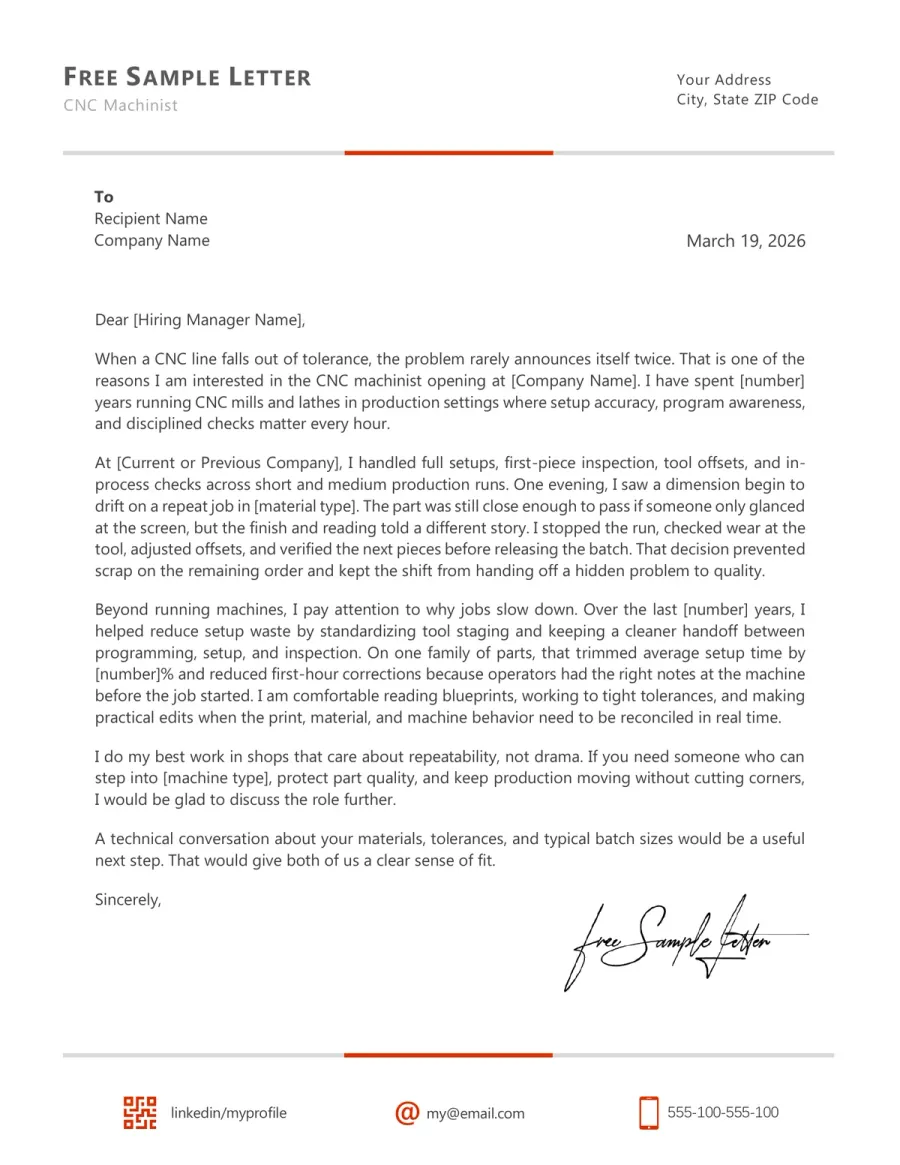
Machine Operator Template Preview Before Word and PDF Download
You can preview the machine operator cover letter template before downloading. This application letter is available in Word and PDF formats for easy editing, printing, and quick job applications.
Make These Machine Operator Samples Yours
Copy-paste cover letters rarely work in manufacturing hiring. Recruiters look for evidence that you understand the shop floor, the real demands of the machines, and the standards of the role. Every sample here should be personalized with your own details, specific tools, and real proof points.
➡️ For more detailed advice, see our guide on how to write a cover letter that real hiring managers want to read
Rewrite the opening for the real job
Start by tailoring your opening line to fit the specific plant, product, or shift. A machine operator cover letter is more effective when the first sentence immediately connects to real production work.
See an example
Your production team needs operators who can keep output steady without losing control of quality, and that is the kind of work I want to build my career in.
Turn one strength into one scene
Do not just say you are careful or reliable. Show it. Link each strength to a specific scene, task, or result so the hiring manager can picture you doing the job instead of just describing yourself.
See what to include
During a busy shift, I noticed two similar orders had been staged together, so I stopped the handoff, checked the paperwork, and corrected the mix-up before loading.
Match the skills to machine reality
Tailor your skills section to the actual demands of the role. In this type of application, safety habits, measurement skills, machine monitoring, and shift discipline matter far more than general motivation.
See Open the example
My background has trained me to work by procedure, keep my station organized, and stay alert to small variations that can affect quality, timing, or the next step in production.
Keep the tone grounded
Keep your tone grounded, not dramatic. Machine operator cover letters are most effective when they are direct, calm, and practical, using short sentences that show sound judgment instead of self-promotion.
See a stronger version
I do not try to sound bigger than my experience. I focus on learning the machine properly, keeping standards tight, and being dependable when production pressure builds.
End with a practical next step
End with a next step that matches the role. A strong closing encourages a practical conversation about training, equipment, or production needs, rather than finishing with a generic polite phrase.
See an example
Use your final lines to reinforce your fit for the role, rather than repeating your entire letter. Connect your closing to the company’s processes, shift environment, or technical expectations so your application ends with a clear purpose.
Machine Operator Keyword Radar From the Hiring Desk
- CNC basics
- Blueprint reading
- Shift discipline
- In-process checks
- Machine setup awareness
- Clean work area
- Troubleshooting
- Tolerance control on repeat runs
- Lockout and safety procedures
- Material handling
- First-piece inspection
- Reliable output
- Reading work instructions
- Handing off clean notes
Do & Don't - What Makes a Machine Operator Letter Credible
Recruiters reading a machine operator cover letter look for signs of control, good judgment, and real job experience within seconds. If your wording feels generic or disconnected from actual production work, trust drops quickly, even before the final paragraph.
Red Flags Recruiters Notice Fast
Red Flags- Stay vague about machines, process or production work
- Stack empty traits instead of real proof
- Sound careless about safety or checking habits
- Overclaim technical ability without one concrete example
Trust Signals That Strengthen the Letter
Trust Signals- Name the kind of work environment you are targeting
- Bring in measurement, setup, inspection or shift discipline
- Keep the tone calm, direct and easy to trust
- Connect your background to output and quality
FAQ - Machine Operator Cover Letter
Can I apply for a machine operator job if I have no direct machining experience? Toggle answer
Yes, but do not exaggerate machine experience. Focus your letter on trainability, basic measurement skills, safety habits, shift discipline, and any previous roles where accuracy and error-checking were important.
Should I mention basic G-code or Haas training if I have never run production parts? Toggle answer
Yes. Present it as a foundation, not as mastery. A brief mention of basic G-code, control familiarity, or coursework is helpful, but be clear that you still need real production-floor experience.
Does warehouse or assembly work count as production experience in a machine operator letter? Toggle answer
It can count, if you explain what skills transfer: repetitive accuracy, pace, staging, labeling, material handling, disciplined handoffs, and catching small mistakes before they affect the next step.
How technical should my letter be if I only know calipers, micrometers, and print basics? Toggle answer
Be technical enough to sound credible. Name the tools you actually use, mention print reading if it is true, and leave it at that. Overstating your technical knowledge does more harm than a modest but accurate explanation.
What matters more in this kind of letter: speed, safety, or accuracy? Toggle answer
Accuracy and safe control come first. Recruiters know output is important, but your letter is stronger when it shows you can keep up the pace without letting small errors lead to scrap, downtime, or poor handoffs.
TL;DR - What Makes a Machine Operator Cover Letter Worth Reading
A machine operator cover letter is effective when it demonstrates control. Show one specific example, one checking habit, and a job-related detail tied to output, inspection, setup awareness, or machine routine. The biggest mistake is claiming to be “hard-working” without saying anything real about shop-floor accuracy.
Ultimately, it is about trust. Recruiters are not just scanning for skills. They are judging whether you understand where mistakes happen, how you handle limits honestly, and whether your tone fits a production environment. A strong CNC machinist or machine operator cover letter feels grounded and credible before it tries to impress.