
Manual Labor Cover Letter Examples for Blue-Collar Jobs (Word/PDF Download)
Manual and blue-collar hiring is about proving you can be relied upon. These manual labor cover letter samples help you show what employers value most: reliability, attention to safety, consistent output, and teamwork, whether on-site, during a shift, or on the line.
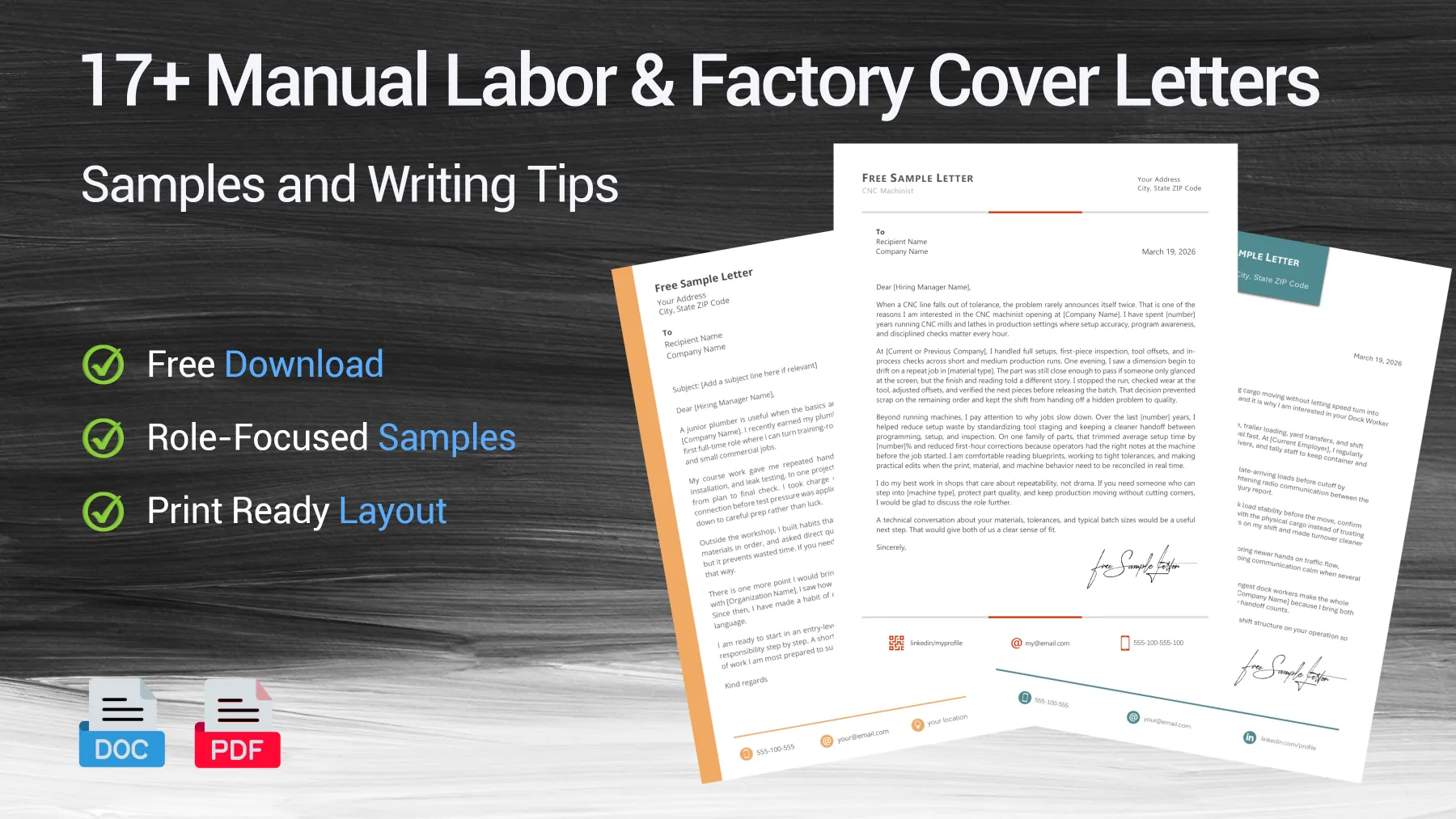
Manual Labor, Factory, and Construction Cover Letter Samples
Browse these samples for factory, warehouse, construction, maintenance, and other hands-on roles. The strongest cover letters clearly show the kind of work you do, how you follow procedures, and why an employer can trust you to show up prepared and do the job right.
Assembly Line Worker Cover Letter
JuniorSeniorPromotionCleaner Cover Letter
JuniorSeniorOtherConstruction Foreman Manager Cover Letter
JuniorSeniorPromotionConstruction Worker Cover Letter
JuniorSeniorOtherDock Worker Cover Letter
JuniorSeniorElectrician Cover Letter
JuniorSeniorInternshipHousekeeper Cover Letter
JuniorSeniorLandscape Gardener Cover Letter
JuniorSeniorTransitionMachine Operator Cover Letter
JuniorSeniorTransitionMaintenance Worker Cover Letter
JuniorSeniorTransitionManual Worker Reference Letter
JuniorSeniorPromotionMason Cover Letter
JuniorSeniorInternshipPicker and Packer Cover Letter
JuniorSeniorSeasonalPlumber Cover Letter
JuniorSeniorInternshipProduction Operator Cover Letter
JuniorSeniorTransitionSecurity Guard Cover Letter
JuniorSeniorTransitionWarehouse Worker Cover Letter
JuniorSeniorOther
How to Write a Manual Labor or Construction Cover Letter
Need a clearer structure before you personalize a sample? Start with our step-by-step guide, then return to the letter that best matches your work setting, tasks, and schedule.
How to Use These Manual Labor Samples
Begin with the sample that matches your actual work setting: factory line, warehouse shift, construction site, maintenance crew, or general labor role. Then replace generic wording with specifics: the type of work you do, the tools you use, the pace you maintain, and the safety rules you follow.
Avoid These Traps
Common mistakes- Using a sample that does not match your real work setting or daily tasks
- Keeping vague claims instead of naming the work, shifts, or routines you handle
- Listing tools or certifications without showing how they support real jobs
- Ignoring safety, procedures, or attendance in a field where trust matters first
- Writing a broad letter when employers need quick proof that you are work-ready
Use These Samples Well
Practical tips- Pick the sample closest to your setting: factory, warehouse, site, or maintenance
- Demonstrate dependability through attendance, punctuality, shift flexibility, and consistent output
- Emphasize safety by mentioning PPE, procedures, hazard awareness, and thorough handovers
- Highlight your range by describing tasks, tools, team setups, and the pace you can manage
- Provide evidence such as quality checks, fewer errors, faster setups, or steady throughput
Free Cover Letter Templates and Letterheads
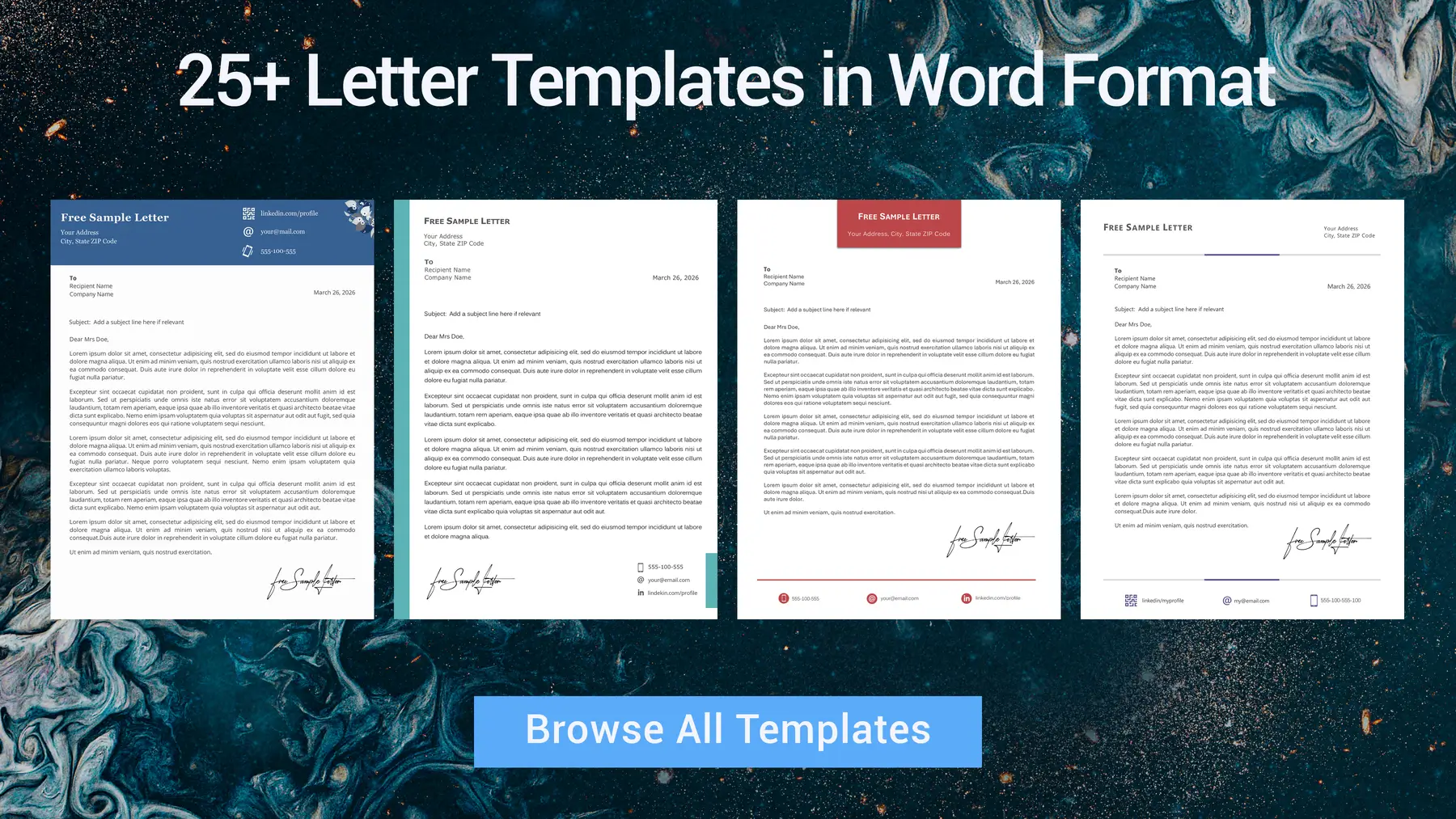
Want a more polished application? Browse our free cover letter templates and letterheads to give your manual labor or construction application a professional layout before submitting.
FAQ - Manual Labor Cover Letters
What should I highlight first for blue-collar jobs? Toggle answer
Start by emphasizing reliability and safety. Show you can work the required shifts, follow procedures, and maintain steady output, then add a concrete example of hands-on work you have done.
Should I mention certifications or licences? Toggle answer
Yes, if they are relevant to the job. Mention the most important license or training, such as forklift operation, site safety, equipment use, or first aid, and connect it directly to the work you can perform.
Can I apply without direct experience? Toggle answer
Yes. Use transferable examples like strong attendance, teamwork, physical stamina, following instructions, and good safety habits. Volunteering, temporary work, and hands-on projects can all help if you describe them clearly.
What makes a manual labor cover letter credible? Toggle answer
A credible manual labor cover letter clearly demonstrates your fit, provides realistic proof, and includes practical details. Employers want to know what kind of work you can do, how you approach it, and whether they can rely on you to work safely and consistently.