
Landscape Gardener Cover Letter Examples That Get Seen in 2026
A strong landscape gardener cover letter should focus on real evidence, not polite filler. The following examples show how to demonstrate plant knowledge, outdoor stamina, and on-site habits that hiring managers truly value.
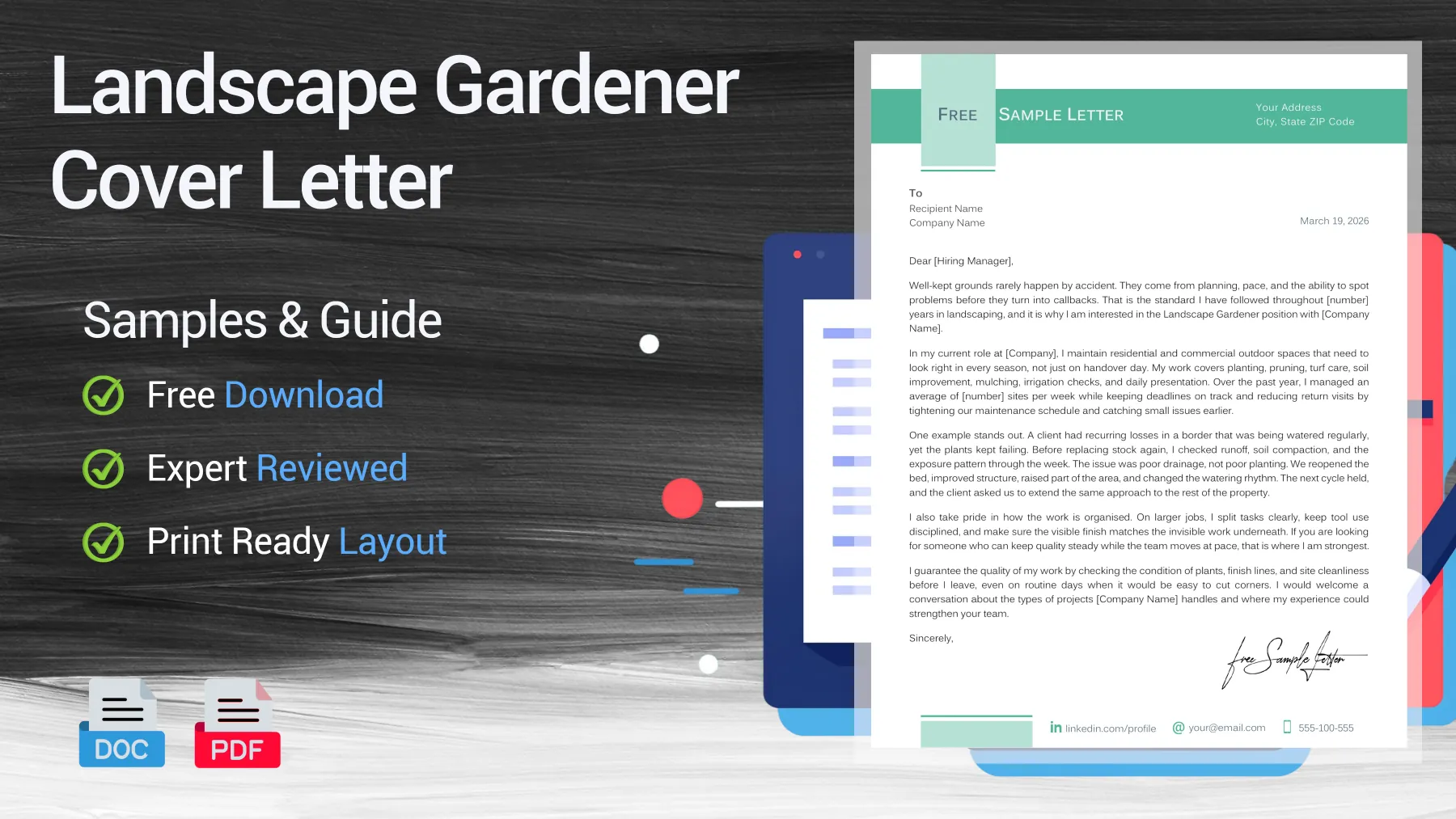
Free Gardening Job Application Samples
According to the BLS, landscaping and groundskeeping jobs are projected to grow 4% from 2024 to 2034, with an average of 171,600 openings per year. Expert advice: a strong cover letter should demonstrate reliability, efficiency, and sound plant-care judgment.
Entry-Level Landscape Gardener Cover Letter for a Recent Graduate
Built for a junior entry-level landscape gardener, this application letter turns training and plant knowledge into hiring proof. It gives a recent graduate a practical, employer-facing voice.
Dear [Hiring Manager],
Healthy outdoor spaces are shaped by people who pay attention to details from the start. This is the approach I would bring to the Landscape Gardener role at [Company Name]. I recently completed my training at [College Name], where I built a solid foundation in plant care, soil preparation, seasonal maintenance, and the safe use of hand tools and small equipment. I am eager to join a team where I can keep learning on real sites and contribute from day one.
In my final training project, our group took over a neglected planting bed with poor drainage and struggling shrubs. I recommended improving the soil with compost, spacing the new plants properly, and adjusting the watering schedule instead of replacing everything at once. Within a few weeks, the bed looked much healthier, and our instructor highlighted our work as an example of why observation should come before action.
I have also developed reliable habits that match the realities of gardening work. On practical days, I arrived early to prepare tools, review the task list, and keep walkways clear so the team could work efficiently. When the weather changes quickly, being prepared directly affects the quality of the final outcome.
One morning, just before planting, I noticed that some of our delivery had dried out more than expected in the trays. We paused, soaked the roots thoroughly, and changed the work order so the most fragile plants were planted first. That small adjustment stayed with me. A good site does not come from rushing, but from reading conditions and acting in the right order.
The best way I can help [Company Name] is by arriving prepared, following site standards, and paying attention to the details that shape the final result. I would appreciate the opportunity to discuss how I can support your team this season and develop in the role with the right guidance.
Sincerely,
[Your Name]

Reviewed by Robert H., Technical Recruiter
I would keep this profile in the interview pile. The letter shows early-career humility, yet it still gives me something concrete to trust.
Experienced Gardening Application Letter
Shaped for an experienced landscape gardener, this sample leads with results, pace, and site ownership. It helps a senior candidate sound credible without turning the letter into a long résumé.
Dear [Hiring Manager],
Well-kept grounds are never accidental. They result from planning, steady pace, and spotting issues before they become problems. This has been my standard throughout [number] years in landscaping, and it is why I am applying for the Landscape Gardener position at [Company Name].
In my current role at [Current Company], I maintain both residential and commercial outdoor spaces that must look their best in every season, not just on handover day. My responsibilities include planting, pruning, turf care, soil improvement, mulching, irrigation checks, and ensuring daily site presentation. Over the past year, I have managed an average of [number] sites per week, consistently meeting deadlines and reducing return visits by tightening our maintenance schedule and catching small issues early.
One example stands out: a client had recurring plant losses in a border that was being watered regularly, but the plants still failed. Before replacing the stock again, I checked the runoff, soil compaction, and exposure patterns throughout the week. The issue turned out to be poor drainage, not poor planting. We reopened the bed, improved the structure, raised part of the area, and adjusted the watering schedule. The next planting cycle was successful, and the client asked us to apply the same approach to the rest of the property.
I also take pride in how I organize the work. On larger jobs, I divide tasks clearly, ensure disciplined tool use, and make sure the visible finish matches the care invested in every step. If you need someone who maintains high standards while the team works efficiently, that is where I am strongest.
I make it a habit to check the condition of plants, finish lines, and site cleanliness before leaving, especially on routine days when it is tempting to cut corners. I would welcome a conversation about the kinds of projects [Company Name] handles and how my experience could benefit your team.
Sincerely,
[Your Name]
Reviewed by Robert H., Technical Recruiter
I would expect a strong interview from this candidate. The tone is calm, and the message proves site judgment instead of hiding behind long service.
Mid-Career Gardening Job Cover Letter
This version fits a career change into landscape gardening without sounding defensive. It proves the move through routines, learning, and steady plant-care practice rather than slogans.
Dear [Hiring Manager],
My decision to move from [Previous Industry] into landscape gardening was not the result of one tough month at work. It was a thoughtful change built over time, through study, volunteer experience, and a growing certainty that I wanted a career tied to real results outdoors. I am now applying to [Company Name] because I am ready to make that commitment fully.
Since beginning this transition, I have completed [Course Name], improved my plant identification skills, practiced pruning and bed maintenance, and spent steady time at [Community Garden/Local Project] working on both the less glamorous and the more rewarding sides of the job. Weeding, lifting, clearing, watering, cleaning tools, and restoring messy areas at the end of the day taught me more about the trade than any brochure ever could.
I understand what employers might wonder when they see a career change: are you serious, or just tired of your old field? That is a fair question. My answer is in the routine I have built. I chose early mornings outdoors over comfort, invested in training before applying, and kept returning to hands-on work, even when tasks were repetitive. Interest is easy to claim. Repetition is the real proof.
I ensure the quality of my work by slowing down to check levels, spacing, finish, and plant condition before moving on. That habit comes from my previous profession, where missed details often led to bigger problems later, and it translates well to site work.
I am not looking for a symbolic fresh start, but for a real place in a gardening team where effort, standards, and consistency matter. I would appreciate the chance to discuss how I can contribute and continue to develop in the role.
Kind regards,
[Your Name]
Reviewed by Robert H., Technical Recruiter
I remember this letter because it sounds adult and clear-eyed. It treats gardening as hard work, not as a vague dream or lifestyle change.
Landscape Gardener Template Preview Before Word/PDF Download
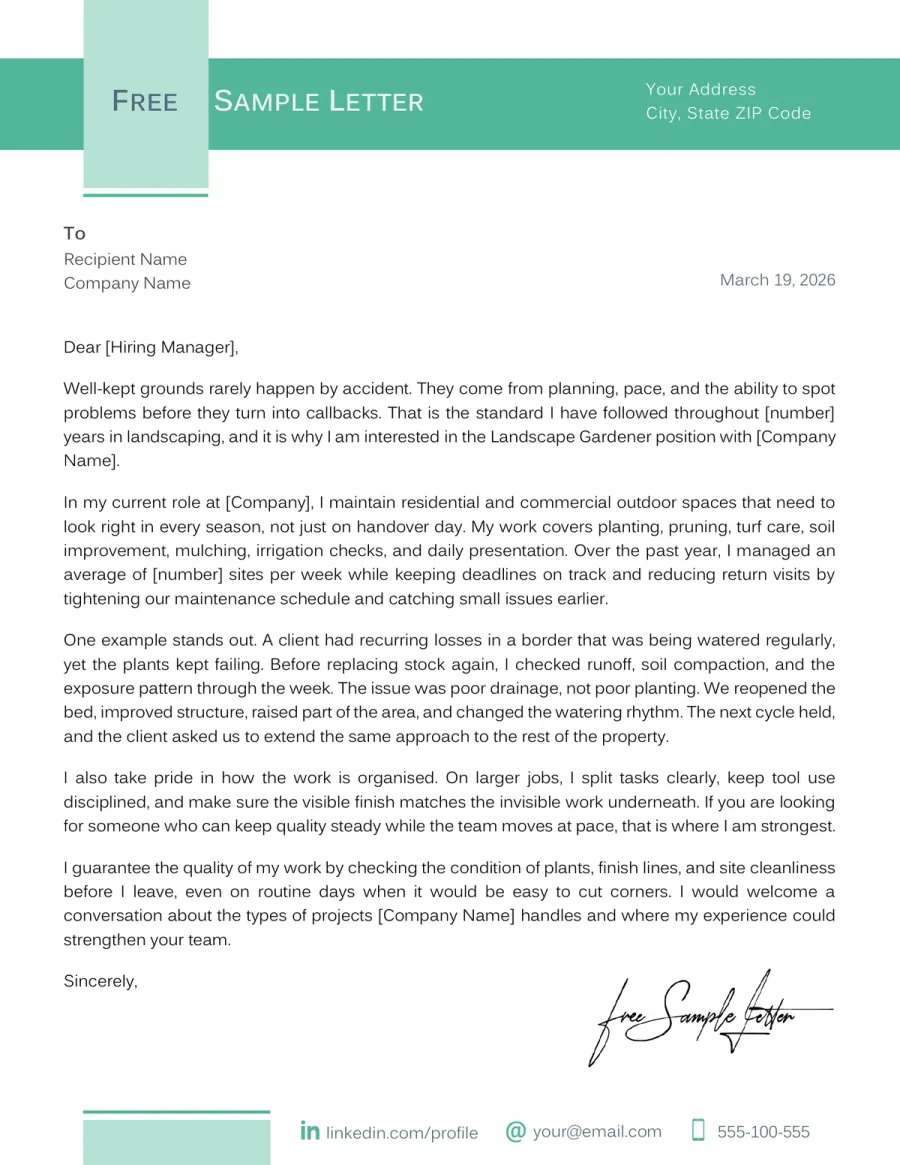
Preview this landscape gardener cover letter template before downloading the Word or PDF file. This preview offers a quick look at the layout, tone, and structure you can expect from a professional gardening job application.
Turn These Gardening Job Templates Into Your Own Letter
Copy-and-paste letters rarely succeed in landscaping, since the work is visible, hands-on, and specific. These samples are most effective when you replace generic phrases with details about actual tools, work habits, and on-site proof that a hiring manager can picture.
➡️ More expert advice in our article how to adapt a cover letter sample without sounding copied
Match the Site and the Role
Start by tailoring your letter to the specific type of site. Private gardens, public spaces, and commercial properties all have different expectations for pace, finish quality, and customer interaction from a landscape gardener.
See an example
Your mix of residential maintenance and seasonal planting stood out to me because I enjoy work where plant care, neat finishing, and day-to-day reliability matter equally.
Replace Generic Claims with Real Tasks
Replace vague claims with the tools, tasks, and site conditions you actually know well. Only mention pruning, mulching, edging, planting, watering, or site cleanup if you have real experience with them.
See what to write
During training, I prepared beds, handled hand tools safely, and learned how watering, spacing, and soil condition affect how quickly a planted area settles in.
Add One Scene the Recruiter Can Picture
Share a specific example that a recruiter can picture instantly. The strongest examples describe a small problem, your response, and the impact on site, rather than a broad claim about landscaping skill.
See how it sounds
When a bed started holding water after planting, I helped loosen compacted soil and adjust the watering plan so the new shrubs had a better start.
Adjust the Tone to Your Profile
Match the tone of your letter to your background and the employer. Junior candidates should sound observant, experienced landscapers should come across as steady, and career changers should be purposeful in explaining their move.
See a stronger line
I do not claim years in the trade, but I can offer careful observation, consistent effort, and a serious commitment to outdoor work.
Close with a Useful Next Step
End your letter by inviting a specific next step, such as a conversation about site types, seasonal workload, or how you could support the team. Avoid closing with a generic thank-you line.
See how to end it
I would welcome the chance to discuss the types of projects you handle and how I could support your team during the coming season.
Keyword Radar for a Strong Landscape Gardener Letter
- Plant ID
- Mulching
- Client-facing
- Irrigation checks
- Seasonal bed preparation
- Safe use of mowers and hedge trimmers
- Outdoor stamina
- Pruning shrubs and small trees
- Clean finish at the end of shift
- Soil prep
- Weeding and edge maintenance
- Plant health
- Hand tools
Do & Don't for a Credible Landscape Gardener Cover Letter
Hiring managers review landscape gardener cover letters with one main question: could this person be useful on a real site next week? Clear evidence of plant knowledge, work habits, and reliability builds trust much faster than enthusiasm alone.
Red Flags That Weaken the Letter
Red Flags- Stay vague about the type of outdoor work you have done
- List qualities without showing one real task or result
- Sound romantic about plants but ignore physical work
- Use copied lines that could fit any manual job
- Overclaim experience without tools, duties, or context
Trust Signals That Build Credibility
Trust Signals- Name real tasks such as planting, edging, pruning or mulching
- Show one short site example with action and result
- Make your level clear from the first paragraph
- Refer to finish quality, plant care or site condition
- Close with a natural next step linked to the role
FAQ - Landscape Gardener Cover Letter
Can I apply if I have never used a zero-turn mower or weed eater? Toggle answer
Yes, you can still apply. Just be honest about your experience. Do not claim to have used equipment you have not. Instead, focus on your safe tool handling, outdoor reliability, physical stamina, and willingness to learn the specific equipment the employer uses.
Should I mention home gardening or volunteer work if I have no paid experience? Toggle answer
Yes, as long as you present it as evidence of your skills. Mention activities like bed preparation, pruning, watering, helping plants recover, or keeping areas tidy. A concrete example is far stronger than a vague statement about loving plants.
How do I make a career change into landscaping sound serious? Toggle answer
Be clear about your career change. Explain why you left your previous field, what hands-on training you completed, and how you gained real-world outdoor experience before applying.
Do I need certifications in the letter to look credible? Toggle answer
Not necessarily. If you hold a relevant certification, mention it. If not, provide practical examples, such as safe tool use, plant care, routine maintenance, and on-site judgment employers can visualize.
What if my background is mostly lawn care, not full landscape projects? Toggle answer
Be upfront about your background. Then, connect your experience with mowing, edging, trimming, cleanup, and maintaining steady standards to the requirements of the job. Being clear about your limits is more credible than overstating your landscaping experience.
TL;DR - What Really Makes a Landscape Gardener Cover Letter Work
A strong landscape gardener cover letter does three things fast: it proves you understand real outdoor work, it gives one believable scene from site life, and it shows plant-care judgment without showing off. The fatal mistake is writing it like a generic manual job letter or, worse, like a speech about loving nature.
Recruiters do not expect a botanical essay. They are looking for clear evidence that you can handle outdoor work, follow routines, and leave a site better than you found it. One honest limitation, one strong example, and a practical closing often inspire more trust than a page full of ambition.