
Personal & Intimate Letter Samples for Love, Apology, Breakup and Friendship in 2026
Use this section when you need a personal letter for love, friendship, apology, reconnection, breakup, or goodbye and aren’t sure how much to say. Begin by considering your relationship, then choose a sample that matches the tone, format, and emotional weight of your situation.
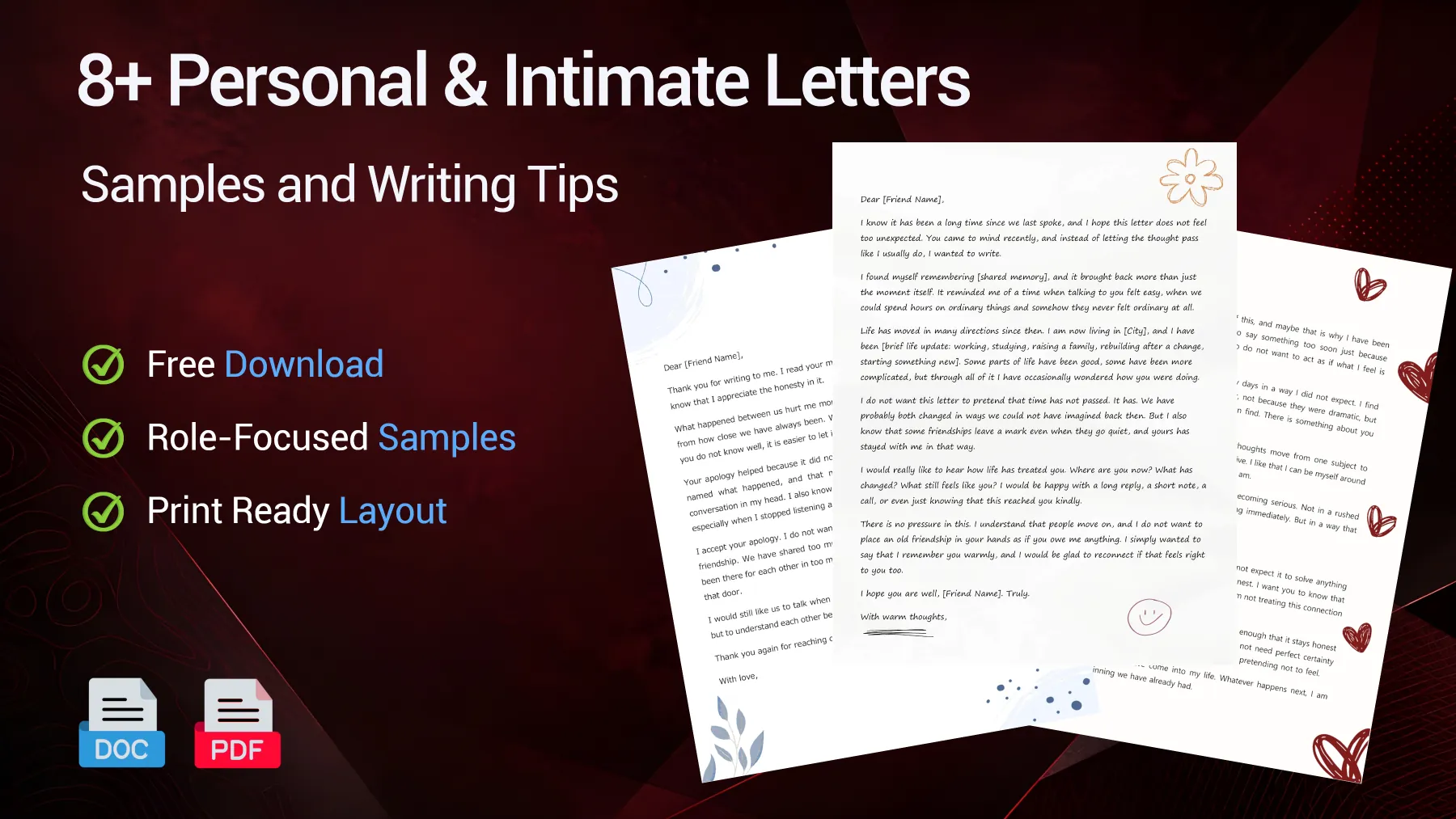
Love Letters and Romantic Personal Messages
Use these personal letter samples when you want to express love, propose, write to a partner, or share romantic feelings in words that sound genuine, not copied or overly dramatic.
Friendship Letters and Reconnection Messages
These examples can help you write to friends, old friends, family-like relationships, or people you want to reach out to again after distance, silence, or life changes.
Apology, Breakup and Goodbye Letters
Use this section when your message needs care, whether you’re saying sorry, accepting an apology, ending a relationship, saying goodbye, or writing through a difficult personal change.
Need Help Writing a Personal Letter?
A personal letter sample gives you a starting point, but your final wording should fit your relationship, your reason for writing, and the right emotional tone. Use the guide if you need help with structure, openings, or closings before you send your letter.
Do & Don’t - Choosing the Right Personal Letter
A personal letter is first judged by how well it fits the relationship. The recipient will notice if your message feels sincere, avoids pressure, exaggeration, or borrowed phrases, and says something real.
What Makes the Letter Hard to Receive
Red Flags- Choosing a long letter when a short note would feel more natural
- Using emotional clichés instead of sharing one real detail
- Making an apology about your own feelings instead of the other person’s experience
- Leaving a breakup unclear to avoid discomfort
- Sending a reconnection note that pressures the person to reply
- Turning a simple friendship letter into a dramatic speech
What Makes the Letter Feel Personal
Trust Signals- Start from your real reason for writing
- Match your tone to your relationship
- Add one memory, action, regret, or concrete detail
- Keep difficult messages clear and restrained
- Give the recipient space to take in your message or respond
- Choose whether to send a text, email, or handwritten letter with intention
FAQ - Personal Letters
What is a personal letter? Toggle answer
A personal letter is written to someone you know as a person, not as an institution. It may express love, apology, friendship, support, goodbye, reconnection, or private news. The tone depends on your relationship and your reason for writing.
When should I write a personal letter instead of a text? Toggle answer
Use a letter when your message needs more care, privacy, or emotional space than a quick text can offer. A text is fine for simple contact, but a letter is better for apologies, love, goodbyes, reconnections, or other important personal moments.
How long should a personal letter be? Toggle answer
The length should fit the situation. A friendly note might be just a few lines, while a serious apology, breakup, love letter, or goodbye message may need several paragraphs if each part adds clarity, responsibility, or warmth.
Can I use a personal letter template? Toggle answer
Yes, but adapt it before sending. Replace generic emotion with a detail only you could include: a memory, a mistake, a reason for reaching out, a boundary, or a simple sentence that fits the person receiving it.
How do I make a personal letter sound sincere? Toggle answer
Keep your purpose clear and avoid over-polished emotion. One honest detail usually feels more sincere than several big phrases. Read the letter aloud and remove anything that sounds borrowed, dramatic, or unlike your normal voice.
What should I avoid in a personal letter? Toggle answer
Avoid guilt, pressure, vague emotion, and clichés. Don’t ask for forgiveness before taking responsibility, leave a breakup unclear, or make the recipient responsible for your feelings. The message should be personal, but also fair to receive.