
Apology Acceptance Letter Examples After a Dispute
Accepting an apology can feel awkward when you still care about the relationship but aren’t ready to pretend nothing happened. These samples help you reply with warmth, honesty, and clear boundaries.
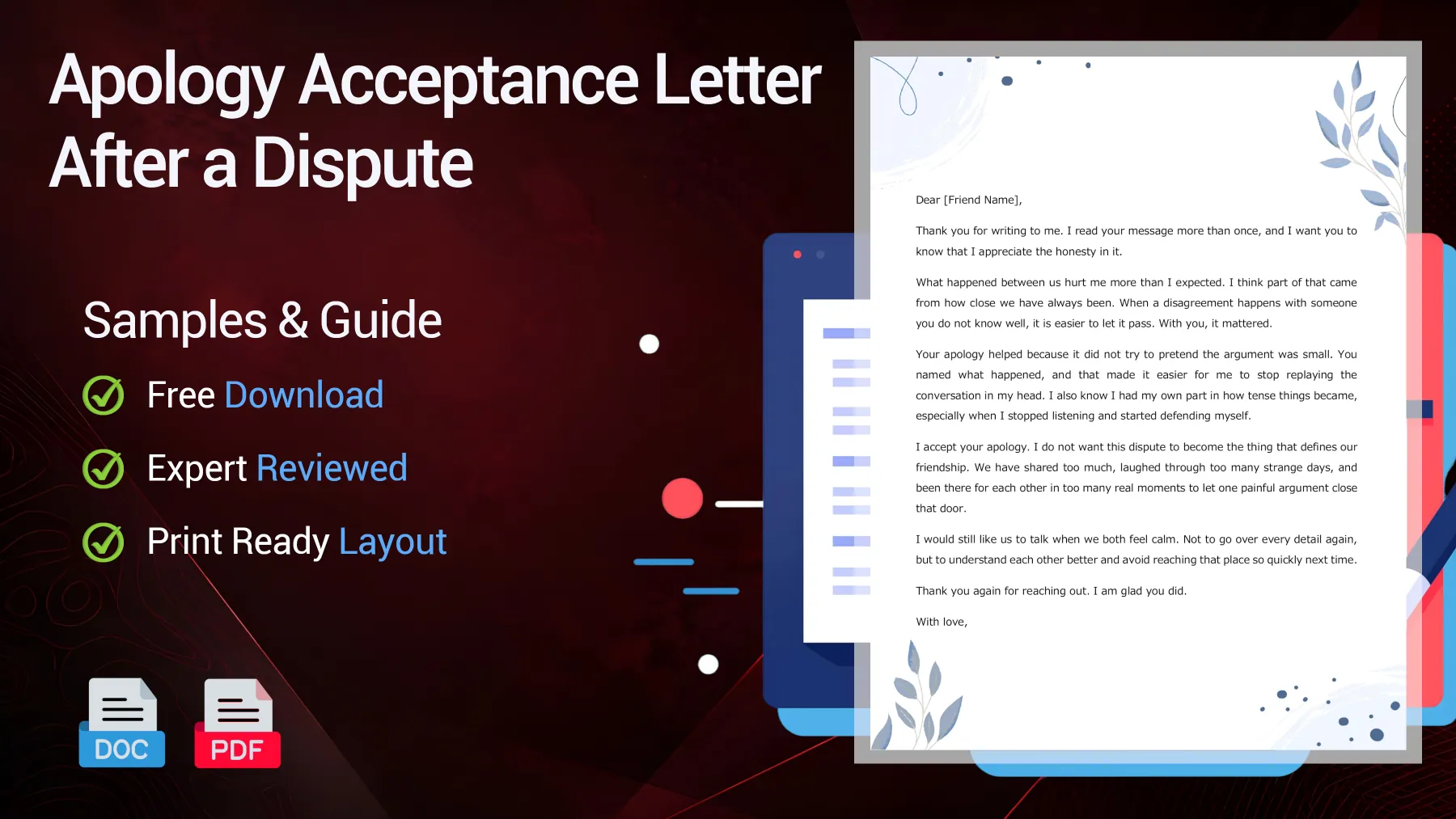
Apology Acceptance Letter Samples You Can Adapt
Before accepting an apology in writing, decide what you’re truly ready to accept. You can appreciate the apology without saying the hurt is gone, and you can forgive someone without rushing the relationship back to how it was before.
A thoughtful apology acceptance letter quietly does three things: it acknowledges the effort, names what still matters, and leaves a realistic next step. Avoid writing a reply that sounds warmer than you honestly feel. Politeness that goes too far can lead to confusion later.
If the situation is professional rather than personal, your tone should shift as well. A reply to a workplace or business apology is usually shorter, more direct, and focused on the facts. You can compare the other side of the exchange with this business apology letter for missing a meeting.
Warm Apology Acceptance Letter to a Close Friend
A warm apology acceptance letter for a friend who has taken responsibility, when you feel ready to rebuild the relationship gently.
Dear [Friend Name],
Thank you for writing to me. I’ve read your message more than once, and I want you to know I truly appreciate the honesty in it.
What happened between us hurt me more than I expected. I think that’s partly because of how close we’ve always been. When a disagreement happens with someone you don’t know well, it’s easier to let it go. With you, it mattered.
Your apology helped because you didn’t try to make the argument seem small. You named what happened, and that made it easier for me to stop replaying the conversation in my head. I also know I played my own part in how tense things became, especially when I stopped listening and started defending myself.
I accept your apology. I don’t want this dispute to become what defines our friendship. We’ve shared too much, laughed through too many strange days, and been there for each other in too many real moments to let one painful argument close that door.
I’d still like us to talk when we both feel calm, not to go over every detail again, but to understand each other better and avoid reaching that place so quickly next time.
Thank you again for reaching out. I’m glad you did.
With love,
[Your Name]

Reviewed by Grace W., Ghostwriter
I like that this letter accepts the apology without erasing the hurt. It opens the door to repair while keeping the friendship honest.
Apology Acceptance Letter When You Still Need Time
Use this apology acceptance letter after a dispute when you value the relationship but still need time before things feel normal again.
Dear [Name],
Thank you for your apology. I want to acknowledge it properly because I know it’s not always easy to come back after a difficult conversation and admit that something went wrong.
I appreciate that you took responsibility for what you said. That matters to me. I also want to be honest: I’m not ready to act as if everything is settled just because we’ve exchanged messages. I was hurt, and I need a little time for my feelings to catch up with your apology.
That doesn’t mean I want to stay angry. I don’t. I accept your apology, and I’m glad you sent it. I just need us to move forward slowly instead of forcing the friendship back into its usual rhythm before we have both understood what happened.
For me, the most important thing now is that we speak to each other more carefully when something feels sensitive. I’d rather pause and come back to the conversation later than say things we both regret.
I hope you can understand this isn’t a rejection of your apology. It’s me trying to be honest enough for the repair to last.
Thank you again for reaching out. I’d like us to keep talking, just gently for now.
Take care,
[Your Name]
Reviewed by Grace W., Ghostwriter
I like the boundary here. The letter accepts the apology but does not rush the relationship back to normal before trust has time to return.
Short Note Accepting an Apology After a Disagreement
A short note accepting an apology when the disagreement was real, but a long letter would make the moment feel heavier than it needs to be.
Dear [Name],
Thank you for apologizing. I appreciate you taking the time to acknowledge how the disagreement affected me.
I was upset when it happened, but I don’t want this to sit between us longer than it needs to. I accept your apology, and I’m ready for us to move forward with a little more care in how we speak to each other.
I’m glad you reached out. Let’s leave room for a better conversation next time instead of letting one difficult moment become bigger than our friendship.
Warmly,
[Your Name]
Reviewed by Grace W., Ghostwriter
I like how this short note says enough without reopening the whole dispute. It accepts the apology and leaves the next step simple.
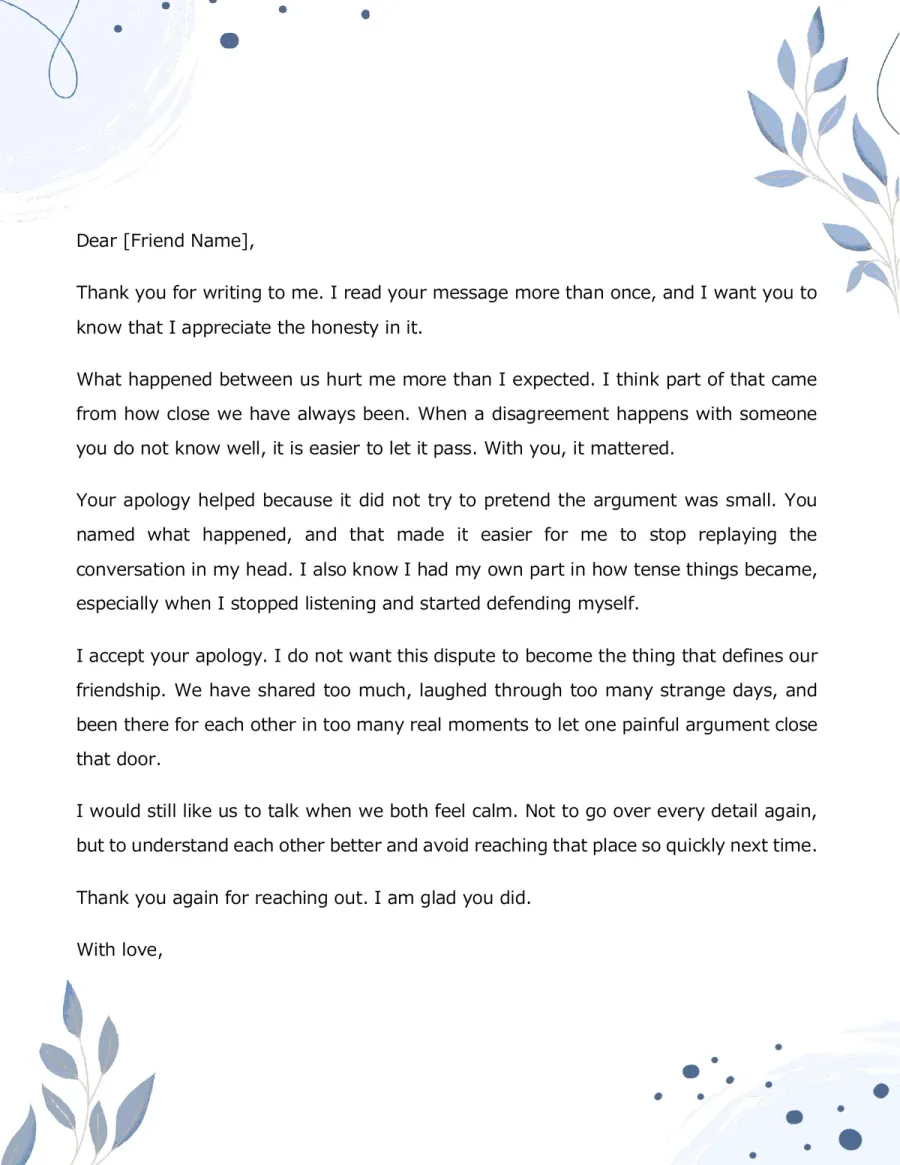
Preview of the Apology Acceptance Letter Template You Can Download
Below is a preview of the apology acceptance letter template you can download and adapt. The document is available in Word and PDF formats and ready for a personal reply after a dispute.
How to Write an Apology Acceptance Letter That Feels Honest
A copied reply can make forgiveness sound automatic. Begin with what you’re truly accepting, what still needs time, and the kind of friendship you want moving forward. ➡️ More help in our guide how to write a personal letter that sounds natural.
Name what you are accepting
Accepting an apology doesn’t mean the hurt never mattered. Be clear about whether you’re accepting the apology itself, the attempt to repair, the next conversation or all three.
See the wording
I accept your apology, and I appreciate that you named what happened instead of brushing it aside.
Acknowledge the effort without overpraising it
Thank the person for apologizing, but don’t make the whole letter about comforting them. Your reply should also be honest about your own feelings.
See the balance
Thank you for writing to me. I know it was not easy, and I appreciate the care you put into your message.
Say what still needs time
If you’re not fully ready to move on, say so calmly. A good acceptance letter can include patience, boundaries, and a slower return to normal.
See the boundary
I accept your apology, but I may still need a little time before everything feels easy between us again.
Add one relationship detail
A small shared detail keeps your letter personal. It can gently remind the reader why the relationship is worth repairing without becoming sentimental.
See the detail
We have known each other too long and shared too many ordinary Tuesdays to let one argument become the whole story.
Close with a realistic next step
Don’t promise more than you mean. Suggest a calm talk, a little time, a gentle reset, or simply an open door, whatever feels true to you.
See the close
I would like us to talk when we both feel calmer, not to reopen the argument but to understand each other better.
What Makes an Apology Acceptance Letter Easier to Receive
- Thank You
- Apology Accepted
- Still Hurt
- Friendship
- Clear Next Step
- No Pressure
- Honest Boundary
- Specific Disagreement
- Room To Respond
- Not Pretending
- Warm But Careful Tone
- Moving Forward Slowly
Do & Don’t - Accepting an Apology After a Dispute
An apology acceptance letter is valued for its emotional honesty. The strongest version thanks the person, accepts only what feels true, and avoids turning repair into pressure.
What Makes the Reply Feel Unclear
Red Flags- Say everything is fine when it is not
- Use forgiveness language before you mean it
- Make the other person feel responsible for your healing
- Reopen every detail of the argument
- Accept the apology but hide a new accusation inside the letter
- Promise the friendship is back to normal too quickly
What Makes the Letter Feel Honest
Trust Signals- Thank the person for apologizing clearly
- Say what you accept and what still needs time
- Keep the tone warm without pretending
- Add one detail that belongs to the relationship
- Set a calm next step if one is needed
- Leave room for the relationship to rebuild gradually
FAQ - Apology Acceptance Letters
How do I accept an apology in writing? Toggle answer
Thank the person for apologizing, clearly say that you accept the apology, and add one honest line about what comes next. If you still need time, mention it gently instead of pretending everything is already fine.
Can I accept an apology if I am still hurt? Toggle answer
Yes. You can accept the apology while still needing time. A calm sentence such as “I accept your apology, but I may need a little time” is often more honest than rushing into complete reassurance.
Should I say I forgive you in the letter? Toggle answer
Only say it if you mean it. Accepting an apology and forgiving someone can happen at different speeds. If forgiveness is not fully there yet, thank them for apologizing and explain that you are still processing the hurt.
How long should an apology acceptance letter be? Toggle answer
It depends on the dispute. A small misunderstanding may need only a short note. A serious conflict may need several paragraphs if the letter clarifies the apology, your feelings, boundaries, and the next step.
What should I avoid when accepting an apology? Toggle answer
Avoid saying “it’s okay” if it wasn’t, using your letter to punish them again, or promising a return to normal before you’re ready. The goal is honest repair, not forced politeness.
TL;DR - Accept the Apology Without Erasing the Hurt
A strong apology acceptance letter doesn’t pretend the dispute never happened. It thanks the person for apologizing, says what you accept, and keeps the next step honest.
Before sending it, check the emotional truth of your message. If you need time, say so. If you’re ready to move forward, say that too, but don’t make the letter sound warmer than you actually feel.