
Healthcare & Medical Resume Template for Nursing, Care and Support Roles
This healthcare and medical resume template is designed to help you present patient care, clinical support, documentation, and care team experience clearly and reliably. It is built for job seekers who want a professional CV or resume layout that is easy to scan, straightforward, and simple to adapt for care-related roles.
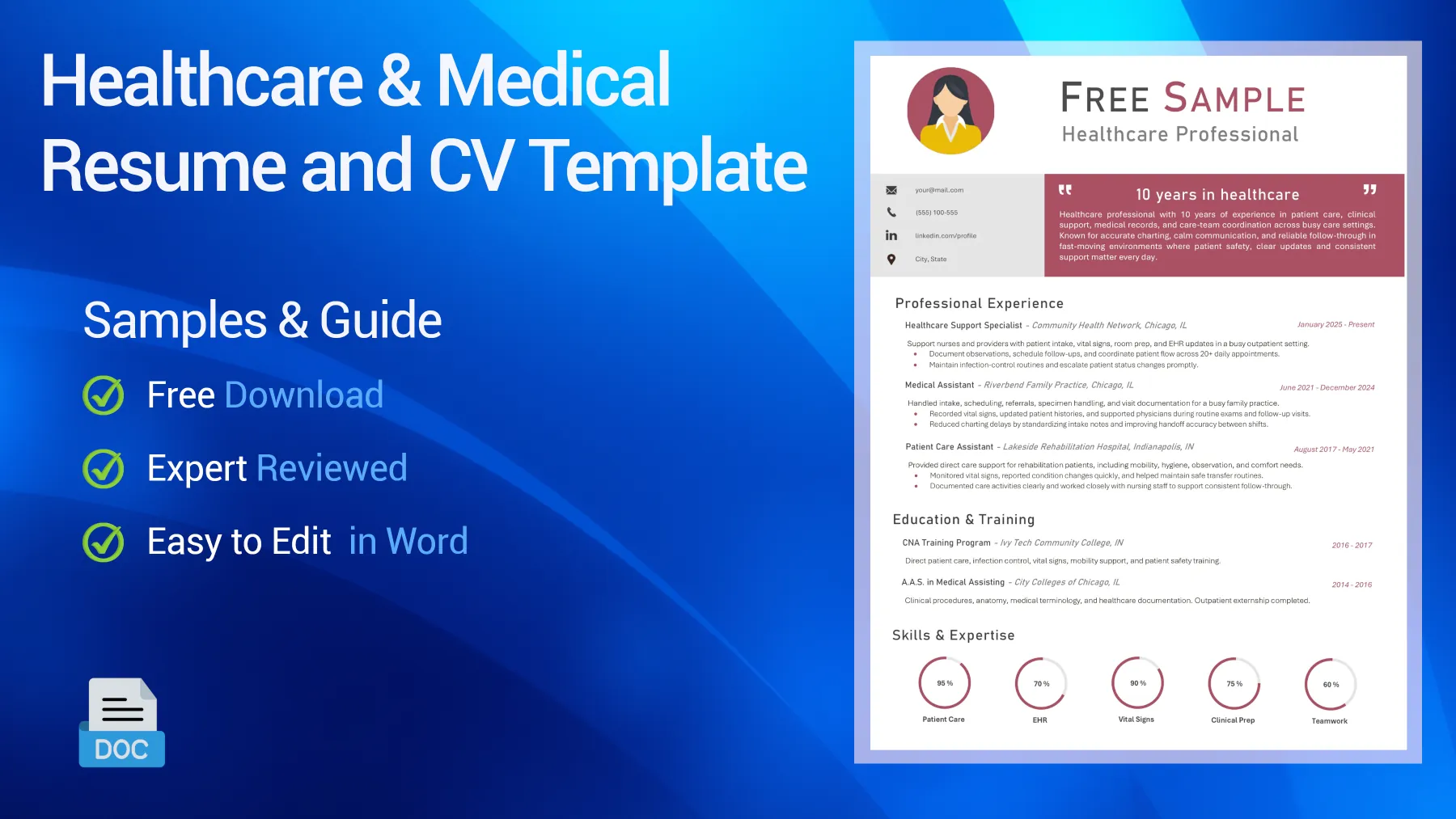
Table of Contents
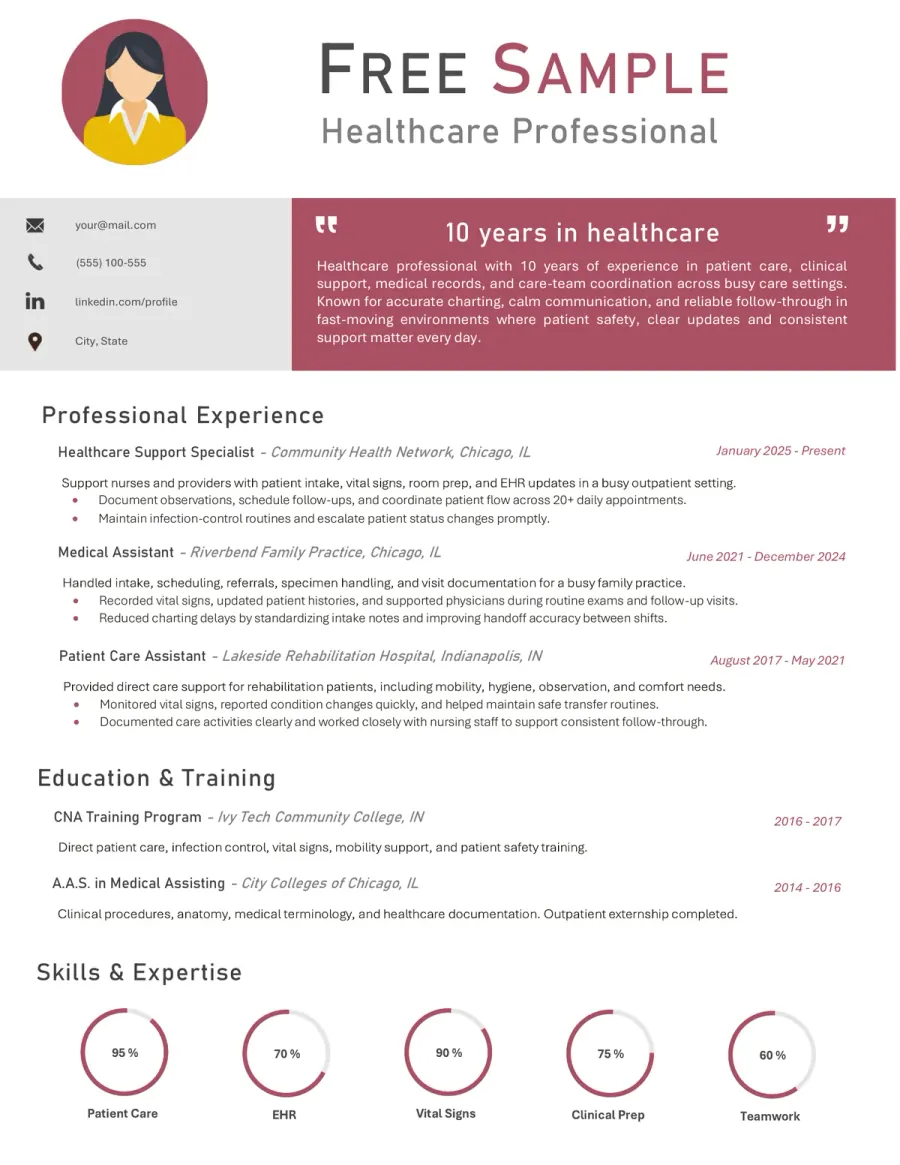
Preview of the Free Healthcare & Medical CV Example You Can Download
Choose this editable healthcare resume template if you want a layout that is clean, readable, and easy to adapt to clinical, care, or medical support roles. This resume and CV format suits nursing, patient care, medical assistant, care aide, and healthcare support applications. Review the structure, then download the Word version and tailor it to your own experience.

Reviewed by Daniel K., Resume Consultant
This layout works well because it appears calm, organized, and credible. Those qualities matter in healthcare, where recruiters need to see patient-facing skills, documentation habits, and hands-on care experience without unnecessary visual clutter.
Who This Healthcare & Medical Resume Template Works Best For
This template is designed for healthcare roles that require patient contact, clinical routines, documentation, and teamwork. Whether you call it a resume or a CV, it works best when employers value reliability, compassion, clear communication, and safe daily care support.
- Nursing candidates who need a clearer resume for patient care, charting, handoffs, medication support, and clinical coordination.
- Certified nursing assistants and patient care aides applying for roles built around daily living support, vital signs, mobility assistance, and close patient contact.
- Medical assistants who need a stronger CV for patient intake, scheduling, records, room preparation, and routine clinical support.
- Healthcare support candidates applying to hospitals, clinics, care homes, rehabilitation settings, or outpatient practices.
- Recent healthcare graduates who need a polished document for entry-level nursing, care, medical support, or patient-facing jobs.
- Candidates moving between care support, nursing support, and broader medical office roles who need a format that can reflect both clinical and administrative strengths.
How to Adapt This Healthcare & Medical Resume Template
Healthcare hiring moves quickly, but recruiters still look for the same core qualities first: can this person be trusted with people, routines, and records? The best medical resumes avoid relying on soft words like “caring” or “passionate”. Instead, they show the type of care you provided, the setting you worked in, and how you handled patients, documentation, and team routines.
Define your care role clearly from the top
Healthcare, nursing, care support, and medical assistant roles often overlap, but recruiters want clarity right away. Start by aligning your headline and summary with the specific role you are targeting, rather than using broad medical terms.
See an example
If the position is for a medical assistant, highlight patient intake, vital signs, scheduling, and records first. For a CNA role, move direct care, mobility support, and daily living assistance closer to the top of your resume.
Show the real patient-care tasks you handled
Avoid generic phrases like “patient support” or “healthcare duties.” Focus on the tasks that matter most to employers: vital signs, charting, medication support, patient intake, hygiene care, room preparation, scheduling, and care team communication.
See What to prioritize
Patient observations, ADL support, wound care assistance, EHR updates, appointment coordination, specimen handling, and discharge support all read better than “helped with clinical tasks.”
Name certifications, systems, and tools when they matter
Healthcare resumes are stronger when clinical readiness is specific. If you have BLS, CPR, CNA, CMA, or another relevant credential, mention it clearly. Also, list EHR or EMR systems, charting tools, and scheduling software you have used in practice.
See Better phrasing
“Recorded vital signs and updated patient notes in Epic” is much more convincing than “familiar with medical software.”
Match the setting as much as the job title
A hospital resume is not the same as a clinic resume, and long-term care differs from outpatient support. Adjust your resume to reflect the pace, patient contact, and responsibilities of the setting you are targeting.
See Quick rule
For hospital roles, push handoffs, monitoring, charting, and teamwork higher. For clinics, bring intake, scheduling, records, and patient flow closer to the front.
Use calm proof instead of emotional wording
Healthcare employers value empathy but trust evidence more than adjectives. Demonstrate consistency through reliable attendance, safe routines, accurate notes, patient communication, and the ability to remain composed in busy care environments.
See Good direction
Instead of “compassionate healthcare worker,” say “supported daily patient care, documented observations accurately, and communicated changes promptly to nursing staff.”
Keywords Recruiters Often Expect on This Type of Resume
- Patient care
- Vital signs
- Patient intake
- Clinical support
- Direct care
- ADL assistance
- Medication administration
- EHR / EMR charting
- Medical records
- Patient monitoring
- Appointment scheduling
- Infection control
- HIPAA compliance
- Care team collaboration
- Room preparation
- Specimen handling
- Discharge support
- Bedside manner
- BLS / CPR
- Mobility assistance
- Chart accuracy
- Healthcare documentation
Do & Don’t - What Makes a Healthcare Resume Easier to Trust
Healthcare recruiters often make quick judgments about safety, reliability, and fit. The strongest resumes are grounded in real patient care, clear routines, and accurate documentation - not just vague claims about compassion.
What Weakens This Type of Resume Fast
Red Flags- Using a generic summary that never defines your care role or setting
- Relying on soft traits like compassionate or caring without job evidence
- Listing clinical tools or certifications with no sign of real use
- Mixing patient care, admin work, and support tasks with no clear order
- Writing bullets that show duties but no reliability, pace, or documentation habits
What Makes the Resume Feel Stronger Immediately
Trust Signals- State whether you target nursing, care support, medical assistant, or patient-facing work
- Show the patient-care tasks you actually handled
- Mention certifications, EHR systems, and clinical tools when they matter
- Highlight charting, communication, safety, and daily care routines
- Keep the layout clean, serious, and easy to scan in under a minute
FAQ - Healthcare & Medical CV Template
Can I use this resume template for both nursing and medical support jobs? Toggle answer
Yes. That is one of its strengths. It covers common ground across nursing, patient care, clinical support, and medical assistant work. You just need to shift the emphasis depending on whether the role is more bedside, clinic-based, or focused on support.
Is this template suitable for a CNA or patient care aide application? Toggle answer
Yes. It works well for CNA and patient care roles if you prioritize direct care, mobility support, daily living assistance, vital signs, and communication with nursing staff near the top of your resume.
What should I highlight first for a medical assistant role? Toggle answer
Begin with tasks that demonstrate clinical readiness and patient flow: intake, vital signs, room preparation, scheduling, charting, records, and any EHR or EMR systems you already use.
Should I include CPR, BLS, or healthcare software on my resume? Toggle answer
Yes, if they are current and relevant. Certifications such as CPR or BLS, and systems such as Epic or other EHR platforms, often help recruiters quickly assess your practical readiness.
Can this template work for hospital and clinic applications? Toggle answer
Yes, but adapt the content for the setting. Hospital roles often require more emphasis on monitoring, teamwork, charting, and pace, while clinic roles call for a stronger focus on intake, scheduling, records, and patient flow.
Can I edit this resume template in Microsoft Word, LibreOffice or Google Docs? Toggle answer
Yes, in most cases. The template is designed for easy editing in Word, but it should also work well in LibreOffice and Google Docs. Minor differences in spacing or fonts may appear depending on the software.
What to Do Next With This Resume Template
A strong healthcare and medical resume or CV should quickly show recruiters what kind of care role you fit - nursing, patient support, medical assistant, or broader healthcare support. Keep the layout calm, lead with concrete care tasks and documentation habits, and avoid the common mistake of sounding caring without showing what you actually handled.
In healthcare, trust comes from specifics. Recruiters notice when your resume highlights patient contact, accurate charting, clinical routines, communication, and reliable follow-through. These details give a healthcare resume real weight.