
Zookeeper Cover Letter Examples for Animal Care Jobs in 2026
Zookeeper Cover Letter Examples for Animal Care Jobs
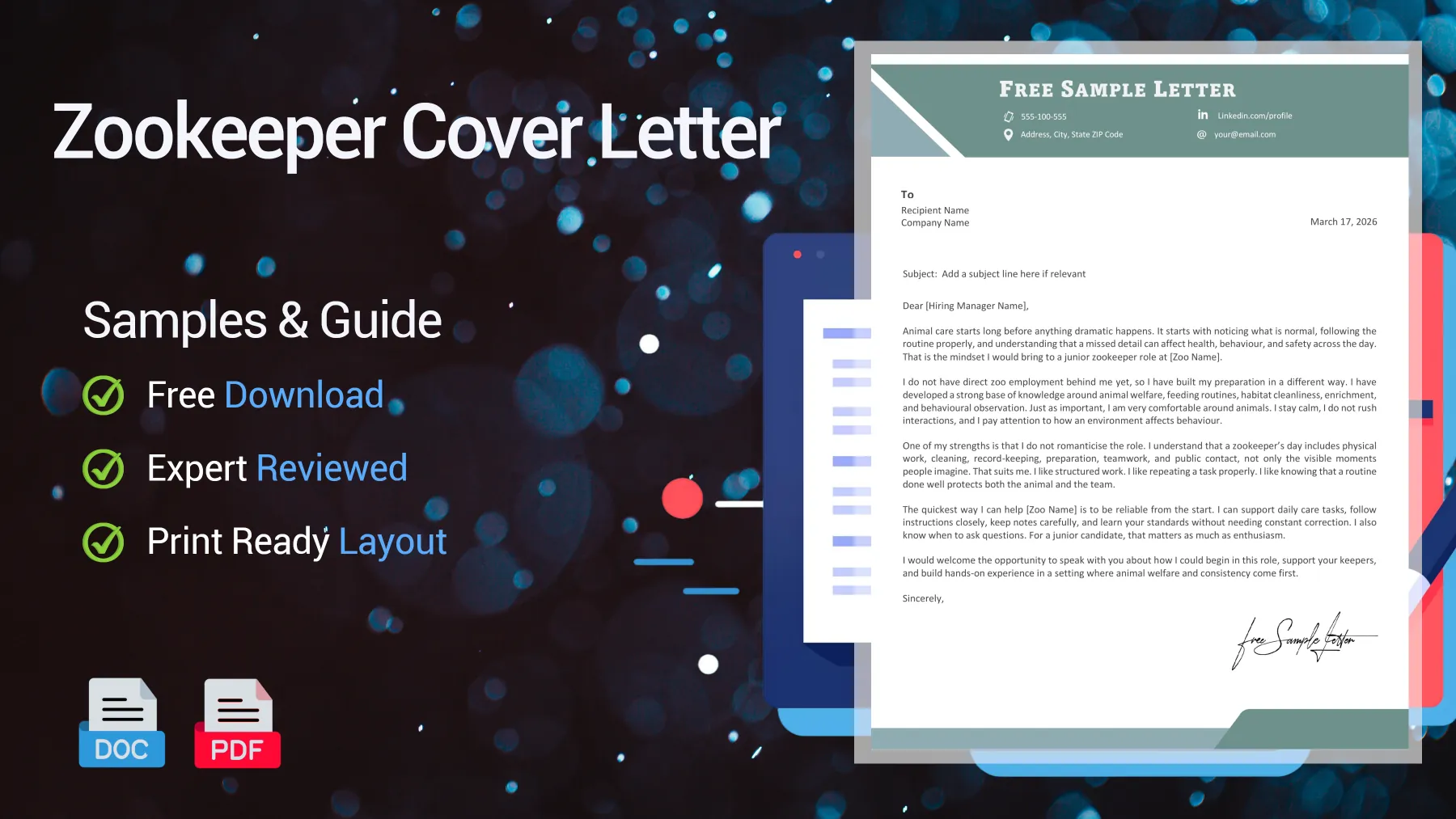
Free Animal Caretaker Cover Letter Samples for Your Application
BLS reports animal caretakers spent 85.8% of the workday standing in 2025. For zookeeper applications, that means your letter should sound operational and grounded, with proof you can handle routine care, physical work, and close observation.
Zookeeper Cover Letter Sample for an Entry-Level Animal Care Candidate
Built for a junior entry-level applicant, this zookeeper application letter turns animal knowledge, daily handling confidence, and observation skills into a credible first professional introduction.
Dear [Hiring Manager Name],
Animal care begins well before anything dramatic occurs. It’s about noticing what’s normal, following established routines, and knowing that missing a small detail can impact health, behavior, and safety throughout the day. That’s the mindset I would bring to a junior zookeeper role at [Zoo Name].
While I don’t have direct zoo employment yet, I have prepared in other ways. I’ve developed a strong foundation in animal welfare, feeding routines, habitat cleanliness, enrichment, and behavioral observation. I’m also comfortable around animals, stay calm, never rush interactions, and pay close attention to how their environment affects their behavior.
One of my strengths is that I don’t romanticize the role. I understand a zookeeper’s day involves physical work, cleaning, record-keeping, preparation, teamwork, and public contact, not just the visible moments people picture. This suits me. I like structured work, repeating tasks properly, and knowing that a well-done routine protects both animals and the team.
The best way I can contribute to [Zoo Name] is by being reliable from day one. I can support daily care tasks, follow instructions closely, keep accurate notes, and learn your standards without needing constant correction. I also know when to ask questions, which matters as much as enthusiasm for a junior candidate.
I would welcome the opportunity to discuss how I could begin in this role, support your keepers, and build hands-on experience in a setting where animal welfare and consistency come first.
Sincerely,
[Your Name]

Reviewed by Claire M., Career Coach
I like that this junior letter does not fake experience. It builds trust through routine, observation, and a realistic view of what entry-level zoo work looks like.
Senior Zookeeper Cover Letter Example for an Experienced Animal Care Professional
Written for a senior zookeeper, this cover letter highlights enclosure standards, animal welfare judgment, records, team coordination, and daily operating discipline.
Dear [Hiring Manager Name],
Reliable animal care depends on two things: consistent routines and accurate observation. After [number] years working with mammals, birds, and mixed-species environments, I’ve learned that the best keepers do more than complete tasks. They notice patterns, maintain standards, and provide the team with actionable information. That’s the experience I would bring to the zookeeper role at [Zoo Name].
In my current position at [Current Facility], I manage daily husbandry tasks including feed preparation, enclosure cleaning, enrichment setup, behavior monitoring, and record keeping. I also support medication schedules under veterinary direction and flag changes in appetite, movement, posture, or social interaction before they become welfare issues. Over the past [number] years, I’ve maintained daily logs for [number]+ animals across multiple sections while ensuring handovers are clear and useful for the next shift.
I also bring practical judgment in live situations. For example, I once noticed a typically food-driven animal repeatedly step back during feeding and shift its weight unevenly. The change was subtle, but I paused the routine, adjusted the space, documented the behavior, and alerted the team immediately. Because it was identified early, the issue was easier to manage. This kind of attention isn’t dramatic, but it protects animals.
I maintain quality by checking three things before I finish any task: that the enclosure is truly ready for the next cycle, that records are detailed enough for a colleague to act on, and that each animal’s behavior matches the expected baseline for the day. This process has helped me remain reliable during busy periods, weekends, and staff transitions.
I would welcome a conversation about how my husbandry experience, record discipline, and calm decision-making could support the standards expected at [Zoo Name].
Sincerely,
[Your Name]
Reviewed by Claire M., Career Coach
I like the authority here because it comes from routines, not ego. The candidate sounds like someone who can protect standards on an ordinary day.
Zoo Internship Cover Letter Sample for a Student Seeking Animal Park Experience
Tailored to a student applying for a zoo park internship, this application letter connects coursework, observation, and day-to-day discipline to a realistic trainee role.
Dear [Hiring Manager Name],
I’m not looking for an internship where I simply observe from a distance. I want to learn by being part of a real animal care routine, where timing, hygiene, feeding, observation, and teamwork all matter. That’s why I’m applying for the internship opportunity at [Zoo Park Name].
I’m currently studying [Field of Study] at [School Name], and I want to build practical experience in a zoo park environment. My coursework has given me a strong foundation in animal biology, welfare, behavior, and habitat needs, but I understand that professional work requires more than classroom knowledge. It demands consistency, humility, and the ability to learn without slowing the team down.
A moment that confirmed this for me came during a visit to an animal facility. While the public only saw the visible part of the day, I noticed how much behind-the-scenes work held everything together: feed preparation, cleaning, note-taking, timing, and moving smoothly between spaces. That experience stuck with me because it matched the type of work I respect most. The visible results depend on the invisible routine.
I would bring that attitude to an internship. I’m comfortable following instructions, handling repetitive tasks without losing focus, and asking clear questions when needed. I’m also at ease in environments with visitors, and I understand that professional behavior matters even at the trainee level. My goal is straightforward: be useful, learn the right habits, and earn trust through consistency.
I would appreciate the chance to discuss how I could support your team during an internship and learn the standards of [Zoo Park Name] through real daily practice.
Sincerely,
[Your Name]
Reviewed by Claire M., Career Coach
I would keep this application because the student does not oversell. The tone is mature, the learning posture is clear, and the fit feels credible.
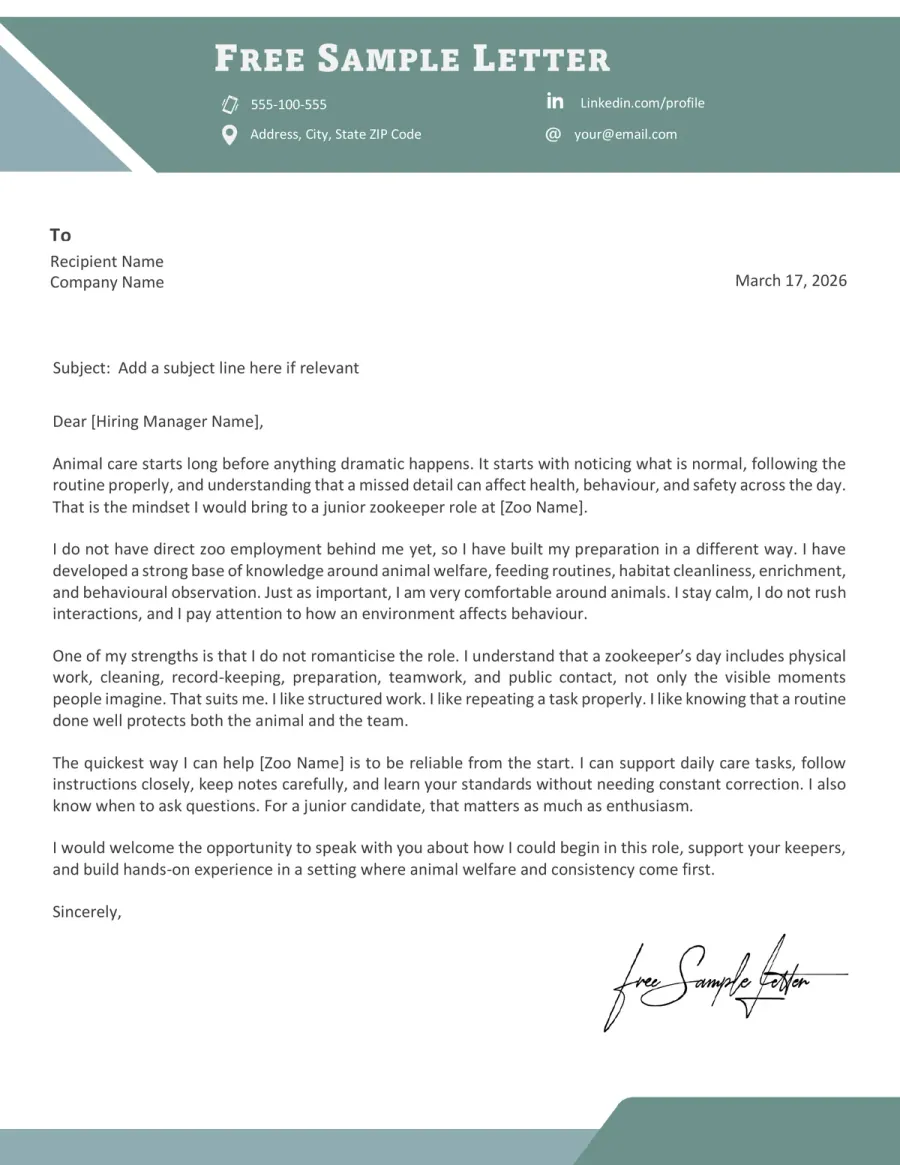
Preview the Zookeeper Cover Letter Template Before Downloading Word or PDF
Preview the zookeeper cover letter template before downloading the file in Word or PDF format. This layout also works for animal caretaker and zoo park application letters.
Make These Zookeeper Cover Letter Samples Yours
Many zoo applications lose credibility when candidates simply copy and paste. Keep the structure, but personalize it with your real animal care experience, species knowledge, work habits, and the specific zoo or park role you’re applying for.
➡️ More expert advice in our article how to write a cover letter that will get you the job
Start with the right animal care angle
Begin by highlighting the aspect of the role you can genuinely support, whether it’s daily care, observation, public contact, or your ability to learn quickly. Your cover letter will be stronger if the first lines sound tailored to the job.
See an example
Instead of writing “I love animals,” write something closer to: “What draws me to zoo work is the routine behind good animal care - feeding accuracy, enclosure standards, and noticing changes early.”
Replace vague interest with proof
Recruiters aren’t looking for general statements about loving animals. They want to see that you can observe details, follow routines, remain calm, and consistently handle repetitive care tasks without taking shortcuts.
See what to include
Try a line like: “I am comfortable with repetitive tasks when they serve animal welfare, whether that means preparing feed carefully, cleaning thoroughly, or recording small changes accurately.”
Match your profile to the right tone
A junior candidate should come across as eager to learn, while a senior keeper should sound steady and experienced. Interns should present themselves as practical and realistic. The same tone does not work for every profile.
See Compare the wording
Junior version: “I am ready to learn your standards quickly.” Senior version: “I can support established husbandry routines from day one.” Internship version: “I want to learn through real daily practice.”
Add the zoo-specific details recruiters scan for
Include job-specific terms like enrichment, enclosure cleaning, feed preparation, behavior monitoring, record keeping, hygiene, public interaction, and team handover. These words help anchor your letter quickly and show you understand the work.
See useful wording
You might write: “I understand that good zoo work combines practical husbandry, clean enclosure routines, accurate note-taking, and calm communication with both colleagues and visitors.”
Close with a useful next step
Your closing should feel natural and specific to the role. Request a conversation rather than a generic opportunity, and mention the type of contribution you’re interested in discussing, such as learning, supporting husbandry, or taking on section responsibilities.
See a closing example
A better ending would be: “I would welcome the opportunity to discuss how I could support your animal care team and contribute to the daily standards expected at [Zoo Name].”
Keyword Radar for a Strong Zookeeper Application
- Behaviour monitoring
- Feed prep
- Public contact
- Daily enclosure cleaning and hygiene
- Enrichment planning
- Calm handling
- Animal welfare
- Record keeping
- Species knowledge
- Visitor-facing communication
- Safe working habits around animals
- Welfare-first judgment
- Cross-team communication
- Shift reliability
Do & Don't for a Credible Zookeeper Cover Letter
Recruiters quickly scan these letters for evidence that you understand the real work: routine, welfare, observation, and steady behavior. A good letter feels grounded from the first lines and remains specific to the role throughout.
Red Flags That Weaken a Zookeeper Application
Red Flags- Rely on generic love-of-animals statements
- Sound unaware of cleaning, records, and routine care
- Overstate confidence without showing any work habits
- Use soft claims with no concrete example behind them
- Ignore the public-facing side of zoo work
Trust Signals That Strengthen Your Letter
Trust Signals- Show how you handle routine without losing focus
- Name animal care tasks in plain, credible language
- Bring in observation, hygiene, and reporting habits
- Match the tone to your actual level of experience
- Close with a practical next step tied to the role
FAQ - Zookeeper Cover Letter
Should I mention specific animals or species in a zookeeper cover letter? Toggle answer
Yes, when it is genuine. Mentioning species you understand or have observed shows practical awareness. Even referencing feeding routines, enrichment, or behaviour patterns demonstrates familiarity with real zoo work rather than abstract interest.
How do I write a zoo cover letter if my experience is only volunteering or pet care? Toggle answer
Focus on transferable habits: observation, routine discipline, hygiene, and calm behaviour around animals. Explain what you learned from those environments instead of exaggerating experience. Recruiters value realistic awareness more than inflated claims.
Should I mention cleaning and routine care in a zookeeper application? Toggle answer
Absolutely. Zoo work includes enclosure cleaning, food preparation, record keeping, and monitoring behaviour. Candidates who acknowledge these routines signal they understand the job beyond the public-facing image.
Do recruiters expect knowledge of enrichment and welfare in a cover letter? Toggle answer
Yes, especially in modern zoos and animal parks. Mentioning enrichment, behavioural observation, or welfare awareness shows you understand that the role is about animal wellbeing, not only handling or feeding.
What helps a zoo internship application letter stand out? Toggle answer
A mature tone and realistic expectations help you stand out. Strong candidates emphasize how quickly they learn, their discipline with routine tasks, and their respect for protocols, instead of trying to sound more experienced than they are.
TL;DR - What Actually Makes a Zookeeper Cover Letter Credible
A strong zookeeper cover letter proves you understand the reality of animal care: routine discipline, observation, and welfare awareness. The biggest mistake candidates make is writing about loving animals without showing how they manage feeding, cleaning, monitoring, or reporting.
The difference often comes from credibility signals. Recruiters trust candidates who describe routines calmly and precisely. A grounded animal caretaker cover letter sounds operational, not emotional. The goal is simple: show that you can handle the daily responsibility behind animal care, not just the visible part of the job.